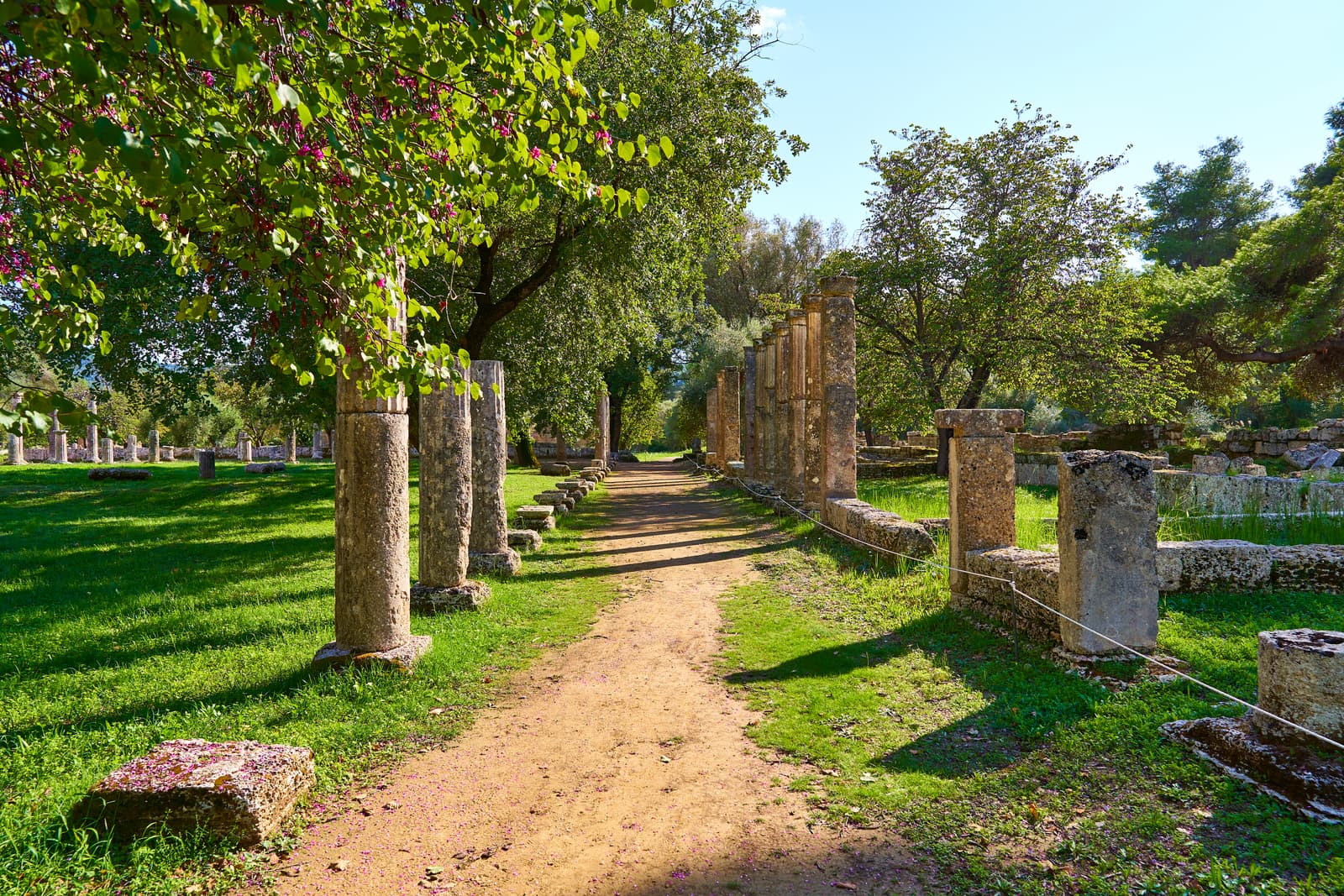
Olympia was never a city. It was a sanctuary of Zeus — the Altis, a sacred grove at the foot of Kronion hill where the Kladeos stream meets the Alfeios river — that filled with athletes, pilgrims, traders and politicians every four years for more than a millennium. What survives is spread through a shady, pine-planted valley, and it rewards a little preparation.
A thousand years in a paragraph
Worship here goes back well before the first recorded Games, traditionally dated to 776 BC. By the fifth century BC the festival drew competitors from Sicily to the Black Sea, and the sanctuary filled with temples, treasuries and statues of victors. The Romans added baths, a lavish fountain house and guest quarters; the Games continued until the late fourth century AD. Earthquakes, floods of the Alfeios and Kladeos, and centuries of silt then buried the site until French and, from 1875, German archaeologists uncovered it.
Tickets and opening hours
- Combined ticket: one ticket covers the archaeological site, the Archaeological Museum, the Museum of the History of the Olympic Games in Antiquity and the Museum of the History of the Excavations. Around €20 in the main season, with a reduced winter rate; concessions apply for EU students, over-65s and others.
- Hours: in summer the site is typically open daily from about 08:00 until the evening (around 20:00); in winter hours are much shorter, closing in the mid-afternoon. Last entry is usually 20 minutes before closing.
- Free days: Greek state sites are free on certain dates, such as some national days and, in winter, the first Sunday of the month.
All of these change — confirm on the official e-ticket portal, hhticket.gr, or book a prebooked ticket through GetYourGuide.
How long do you need?
- Three hours — two in the sanctuary, one in the Archaeological Museum. This is what a shore excursion gives you, and it covers the essentials.
- Half a day — add the Museum of the History of the Olympic Games and lunch in the village.
- One night — the version we recommend: the site at opening time, the museum at midday, and a quiet evening in the village.
- Two or three days — add a winery or olive-oil tasting, Kaiafas Lake, or the mountain temple at Bassae.
What to see
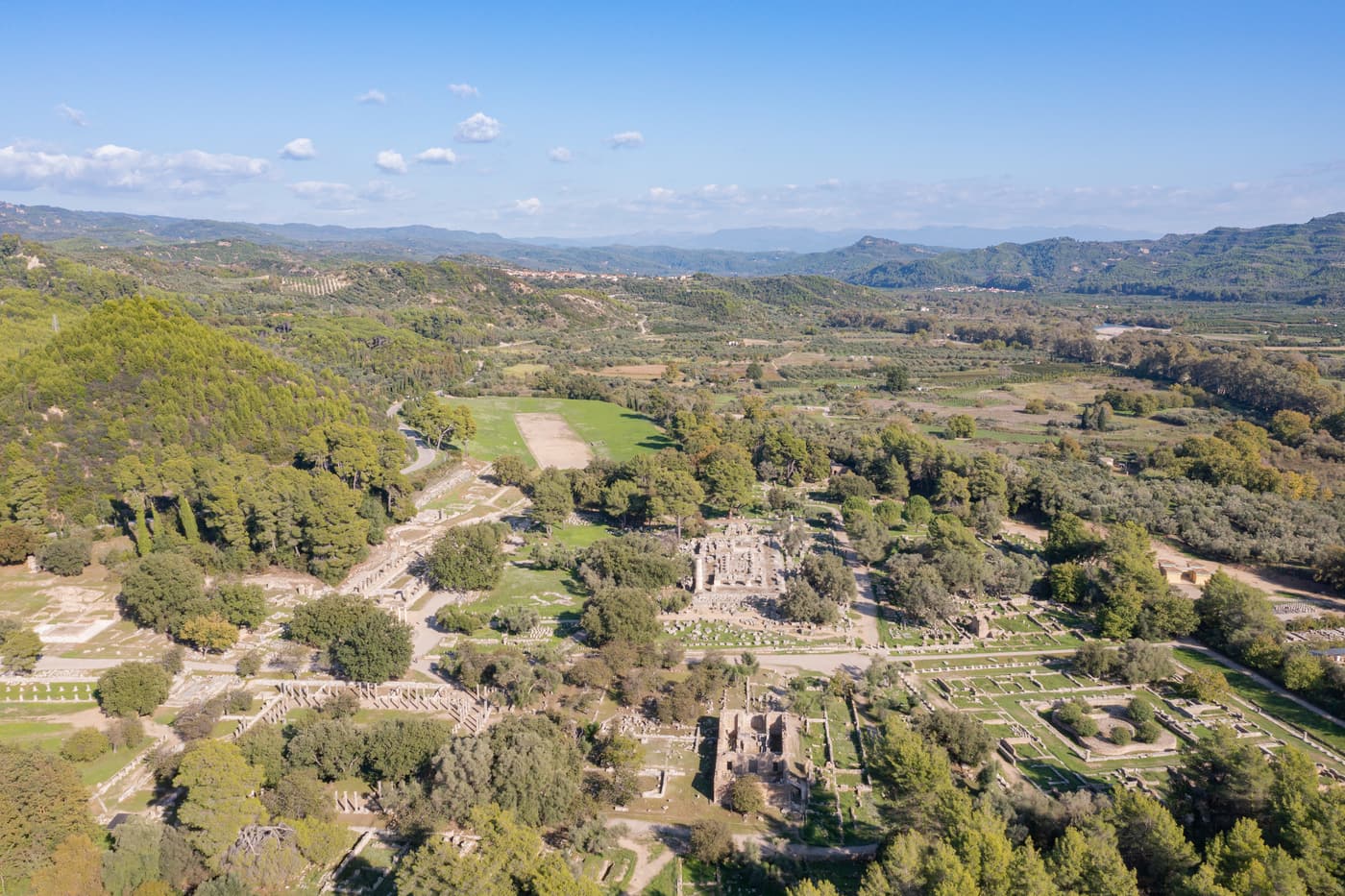 The sanctuary (Altis)
Archaeological Site of Olympia
The sanctuary of Zeus, where the Games were born
The Altis — the sacred grove of Zeus — and everything built around it for over a thousand years: temples, treasuries, training grounds, guesthouses and the stadium, spread through a pine-shaded valley below Kronion hill.
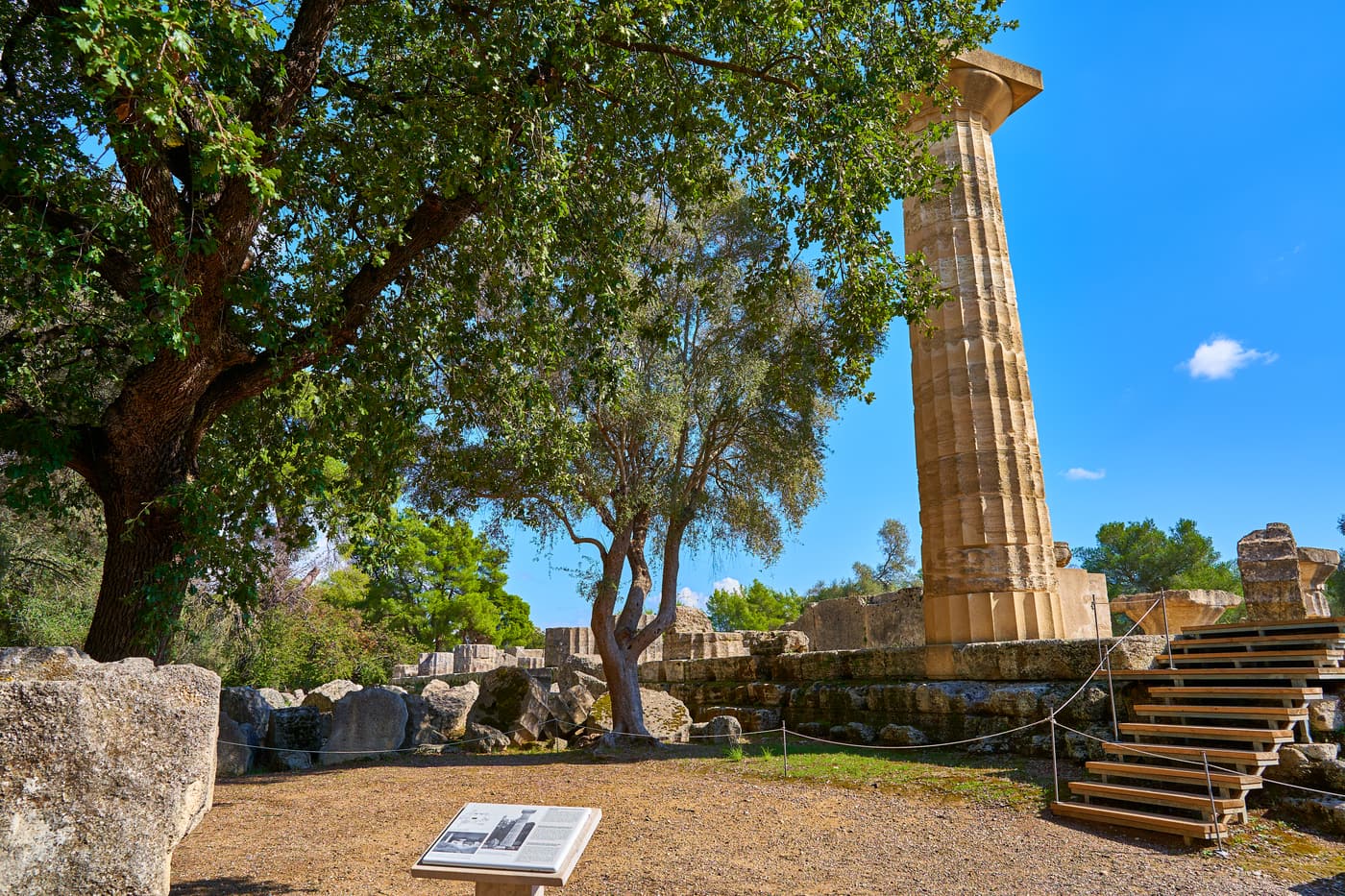 The sanctuary (Altis)
Temple of Zeus
Home of one of the Seven Wonders
The largest temple in the Peloponnese, completed around 456 BC, once housed Pheidias’s colossal gold-and-ivory statue of Zeus. Earthquakes toppled it; its great column drums still lie where they fell.
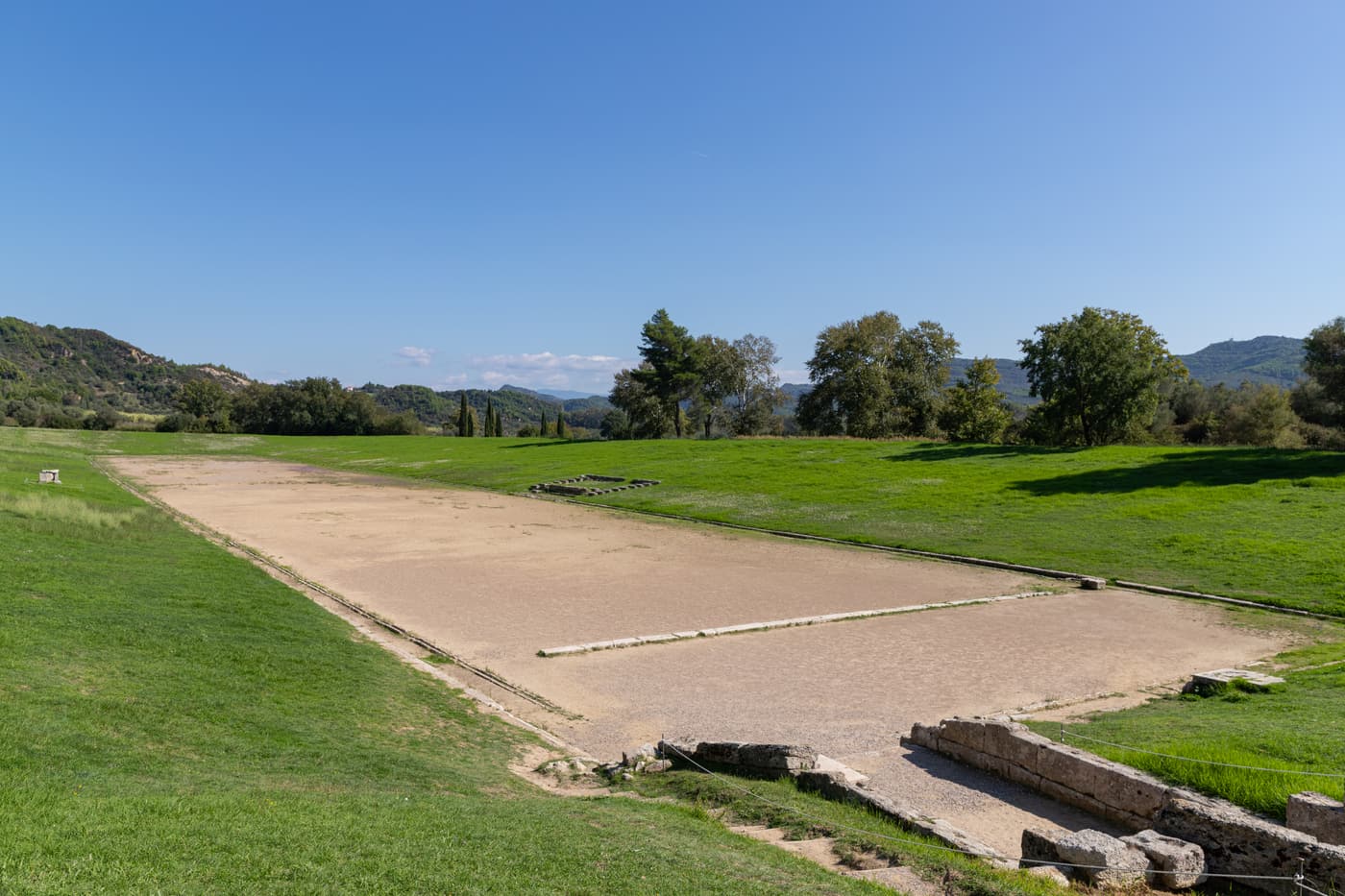 The sanctuary (Altis)
Ancient Stadium
The original Olympic track
Walk through the vaulted tunnel athletes used and step onto the 192-metre track where the footraces were run, framed by grassy embankments that once held tens of thousands of spectators.
 The sanctuary (Altis)
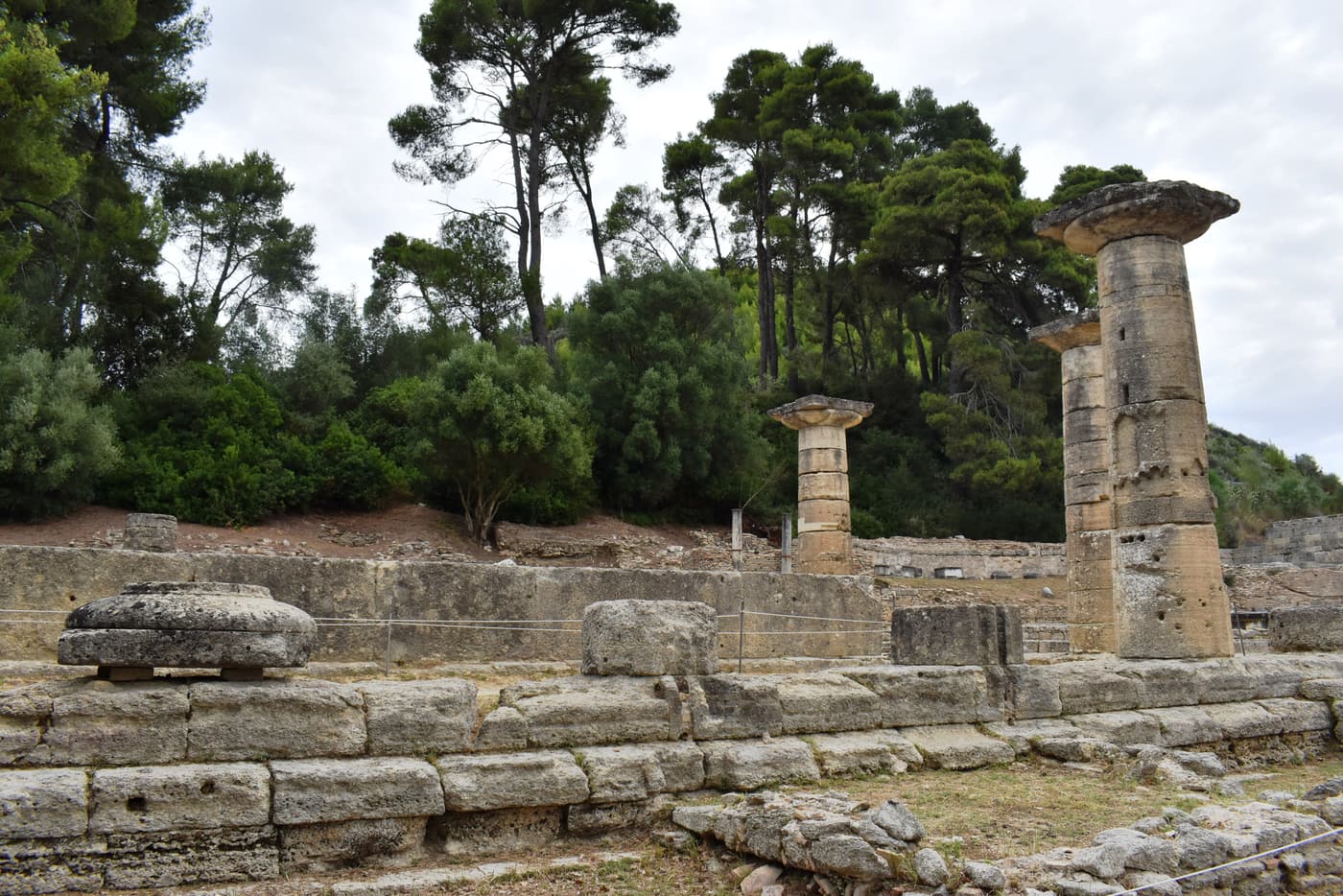
Temple of Hera (Heraion)
Where the Olympic flame is lit
One of the oldest monumental temples in Greece, built around 600 BC. Its mismatched columns tell the story of wooden supports replaced in stone over centuries — and in front of it, the Olympic flame is lit before every Games.
See all of them, with directions and tours, in our things to see guide.
A route through the site
From the entrance, walk south past the Gymnasium and the colonnaded Palaestra, where athletes trained and wrestled; continue to the Workshop of Pheidias, where the great statue of Zeus was made, and the Leonidaion guesthouse. Enter the Altis to stand before the Temple of Zeus, then head north to the round Philippeion, the ancient Temple of Hera and the Nymphaeum. Walk along the terrace of the treasuries, past the bases of the Zanes — bronze statues of Zeus paid for by athletes fined for cheating — and through the vaulted tunnel into the stadium. Two hours, comfortably.
What it costs
| Item | Typical price |
|---|---|
| Combined site & museums ticket | ≈€20 (summer), reduced in winter |
| VR glasses & audio tour | from ≈€25 |
| Private guide / archaeologist (2 h) | from ≈€118 pp, or per group |
| Katakolo shore excursion | ≈€40–110 |
| Taverna lunch with a drink | ≈€15–25 |
| Hotel double, per night | ≈€50–110 |
| Day trip from Athens | from ≈€69 |
What to eat
The village main street is lined with tavernas aimed at day visitors; the better meals are often a street or two back, or in the hill villages around. Look for grilled meats, moussaka, gemista (stuffed tomatoes and peppers), a horiatiki salad dressed with local olive oil, and — in summer — the famous watermelons of Ilia. Wine from the surrounding Ilia vineyards is good value, and several estates between Olympia and Pyrgos welcome visitors for tastings.
Where to stay
Staying overnight is the single biggest upgrade you can make. Options fall into three groups:
- In the village — family hotels and guesthouses on or near the main street, walking distance to the site.
- On Drouva hill — the best-rated hotels, with pools and valley views, a short drive or a 20–30 minute walk away.
- On the coast — beach resorts on the Ionian coast around 30 minutes away, for combining Olympia with a sea holiday.
We compare the best of each, with live rates, on our where to stay page.
Practical details
- Money: euro. Cards are widely accepted and there are ATMs on the main street.
- Shade and water: the Altis has pine shade; the stadium has none. Carry water, a hat and sunscreen from May to October.
- Shoes: paths are gravel and uneven stone. Comfortable, closed shoes help.
- Accessibility: the main paths are mostly level gravel, but some areas have steps and rough ground; the museums are largely accessible.
- Rules: no climbing on the monuments, no eating inside the site, and professional photography needs a permit.
Common mistakes
- Skipping the Archaeological Museum. The pediments of the Temple of Zeus and Hermes of Praxiteles are the highlight of many people’s visit.
- Arriving at 10:30 on a multi-ship day, in August, without water.
- Walking around without context. Much of Olympia is low foundations — a guide, the VR tour or an audio guide transforms it.
- Missing the stadium tunnel. It is at the north-east corner of the site, past the treasuries — some visitors leave without finding it.
- Booking a day trip from Athens when you had two days — see the tour comparison.