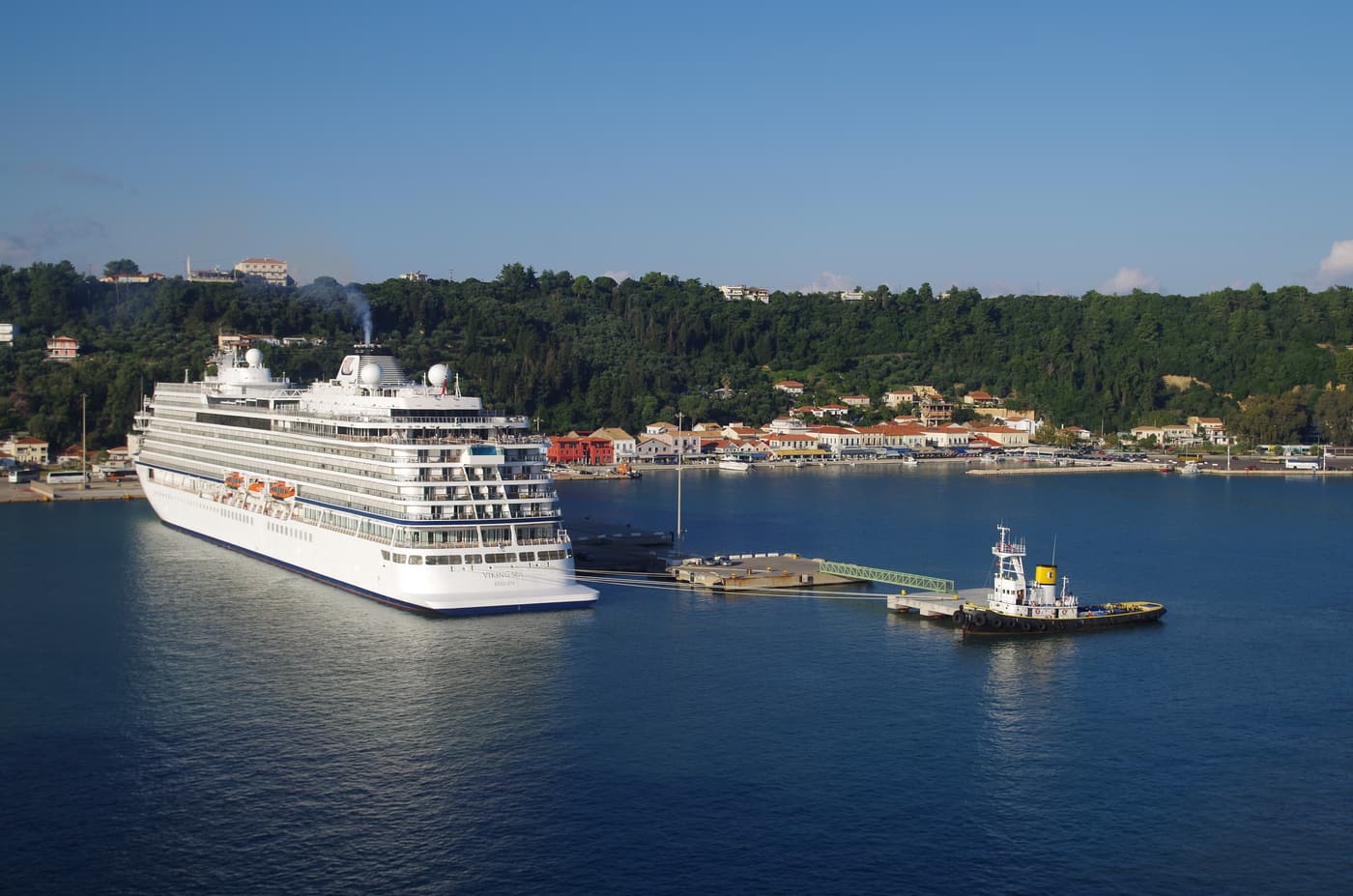
The sanctuary of Zeus — the Altis — takes two hours. The museums take another one or two. And within reach of the village are an Ionian lagoon, one of the most remote temples in Greece and the cruise port where most visitors arrive. These are the places we would build a visit around, each with its own guide covering what to see, how to get there and which tours cover it.
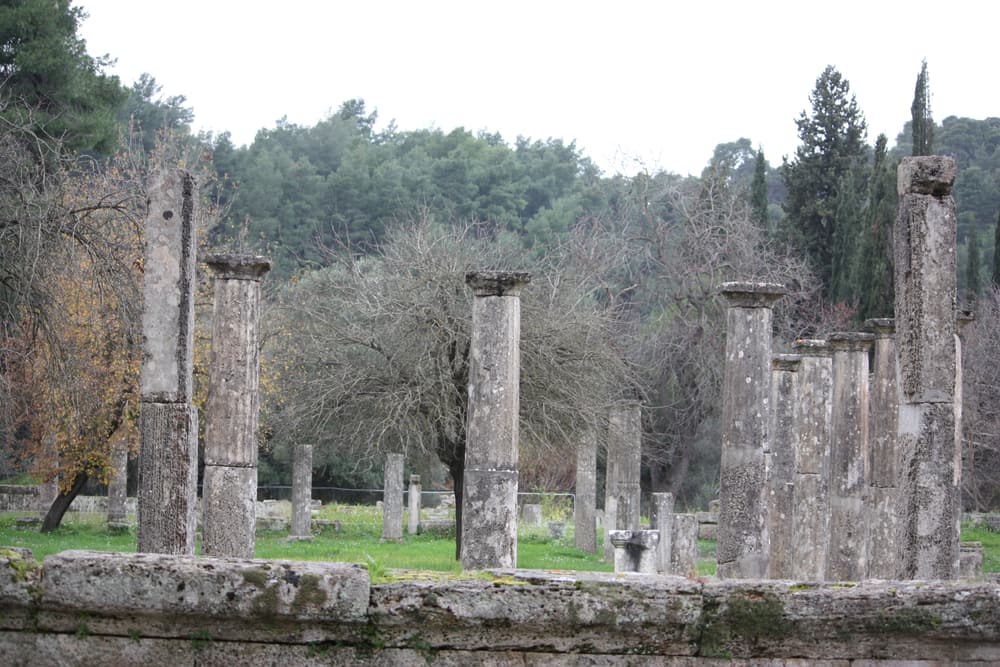
Things to See at Ancient Olympia & Around
Thirteen places that turn a quick stop into a real understanding of Olympia — and the Peloponnese around it.
The sanctuary (Altis)
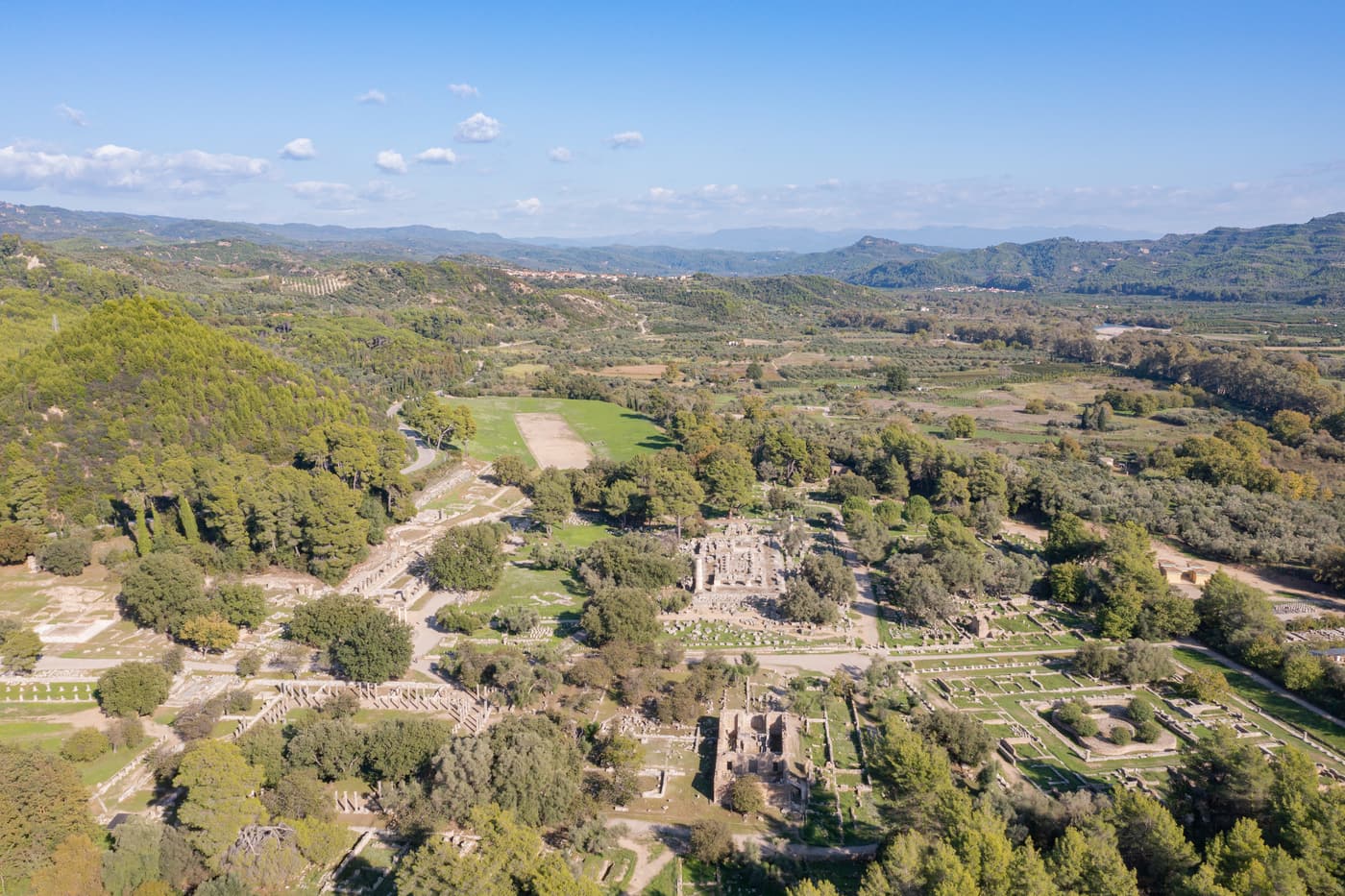 The sanctuary (Altis)
Archaeological Site of Olympia
The sanctuary of Zeus, where the Games were born
The Altis — the sacred grove of Zeus — and everything built around it for over a thousand years: temples, treasuries, training grounds, guesthouses and the stadium, spread through a pine-shaded valley below Kronion hill.
 The sanctuary (Altis)
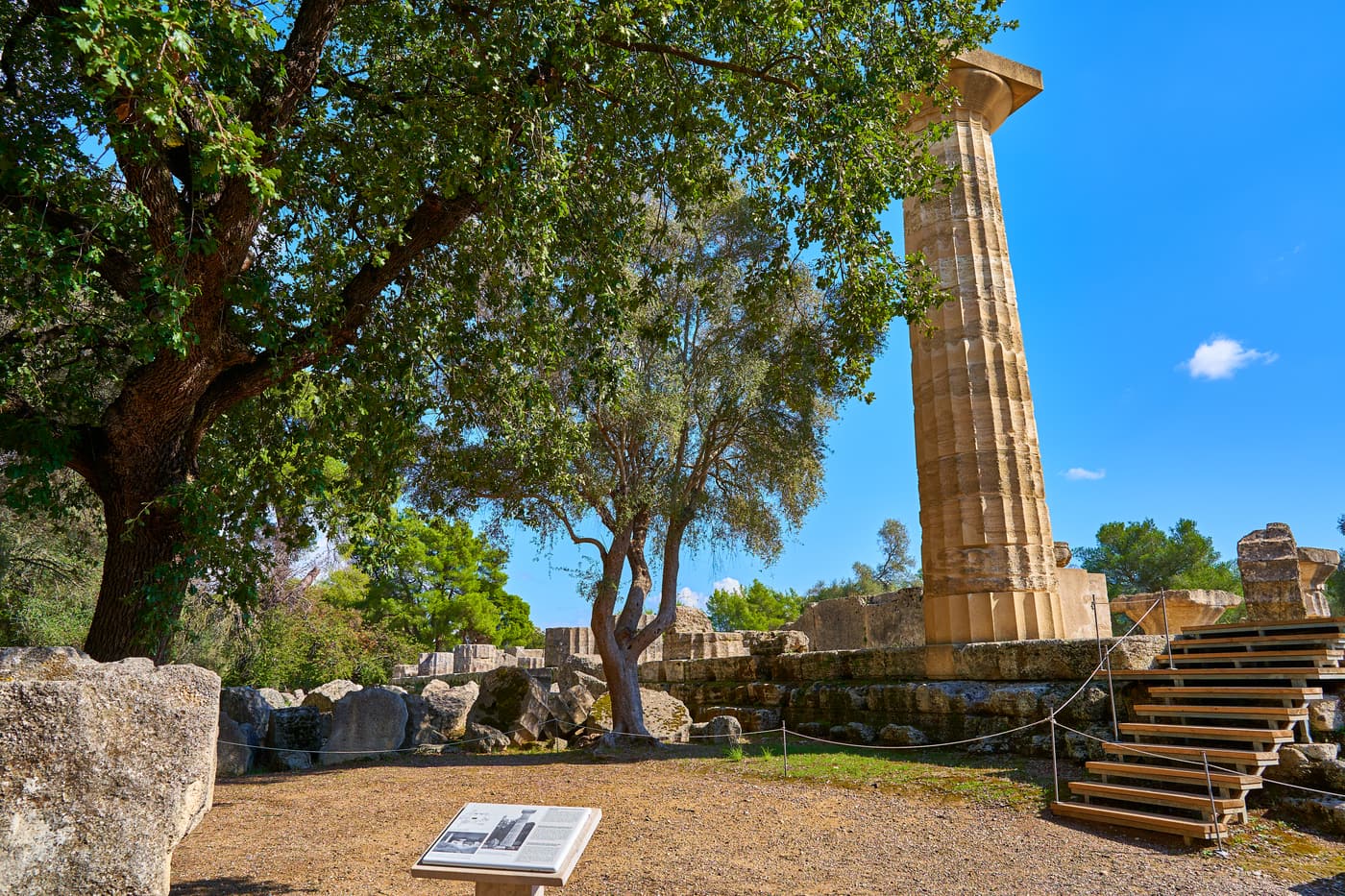
Temple of Zeus
Home of one of the Seven Wonders
The largest temple in the Peloponnese, completed around 456 BC, once housed Pheidias’s colossal gold-and-ivory statue of Zeus. Earthquakes toppled it; its great column drums still lie where they fell.
 The sanctuary (Altis)
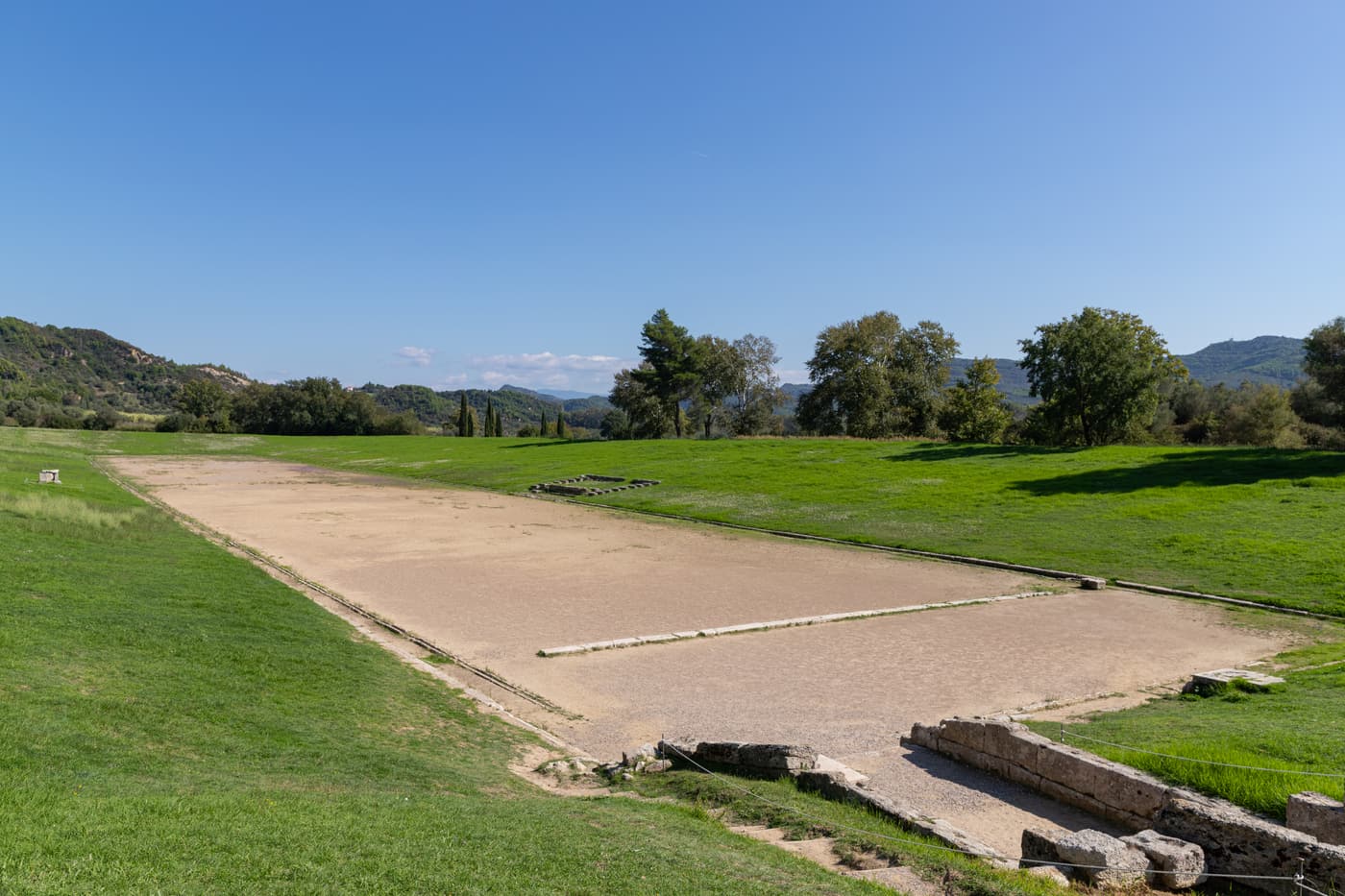
Ancient Stadium
The original Olympic track
Walk through the vaulted tunnel athletes used and step onto the 192-metre track where the footraces were run, framed by grassy embankments that once held tens of thousands of spectators.
 The sanctuary (Altis)
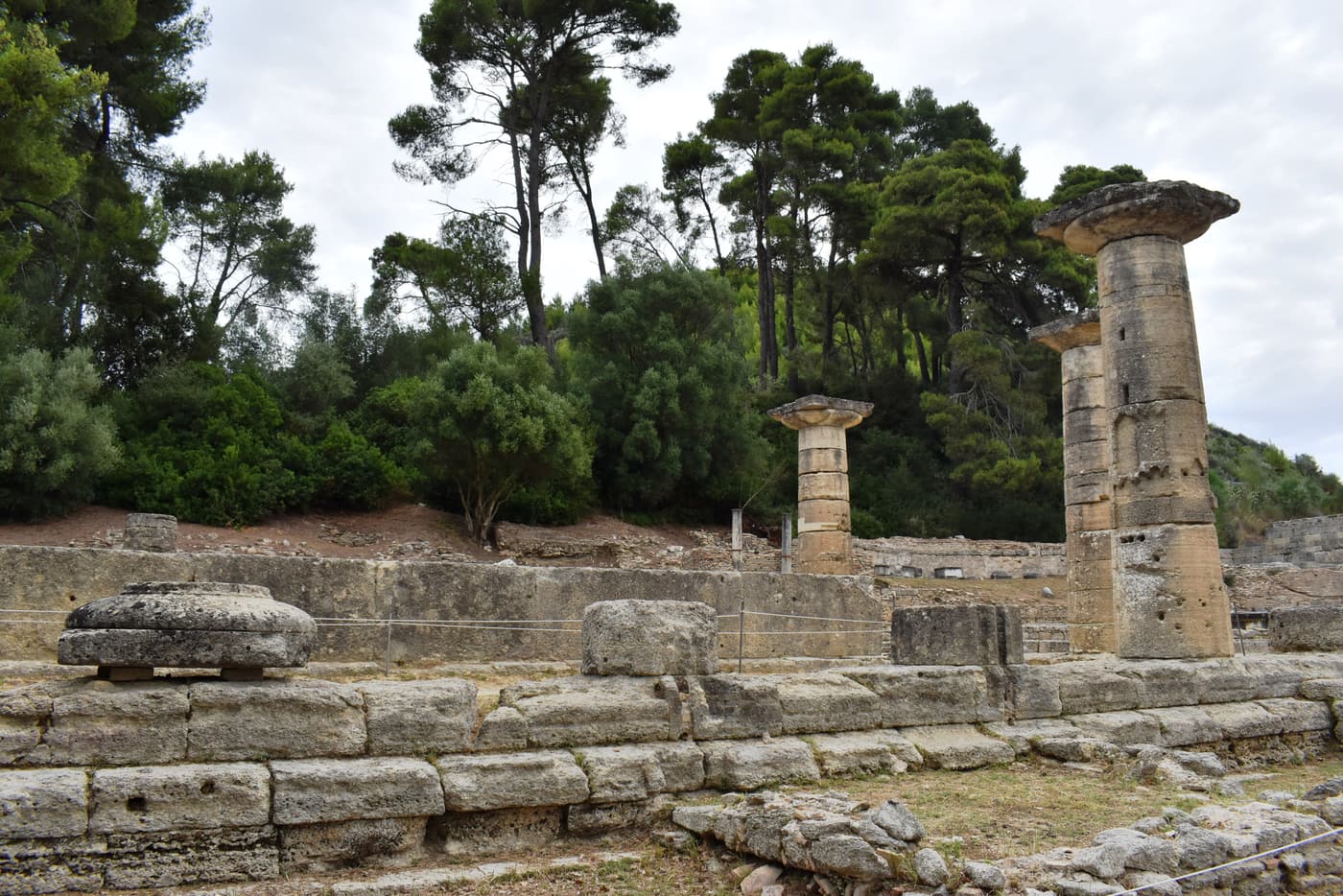
Temple of Hera (Heraion)
Where the Olympic flame is lit
One of the oldest monumental temples in Greece, built around 600 BC. Its mismatched columns tell the story of wooden supports replaced in stone over centuries — and in front of it, the Olympic flame is lit before every Games.
 The sanctuary (Altis)
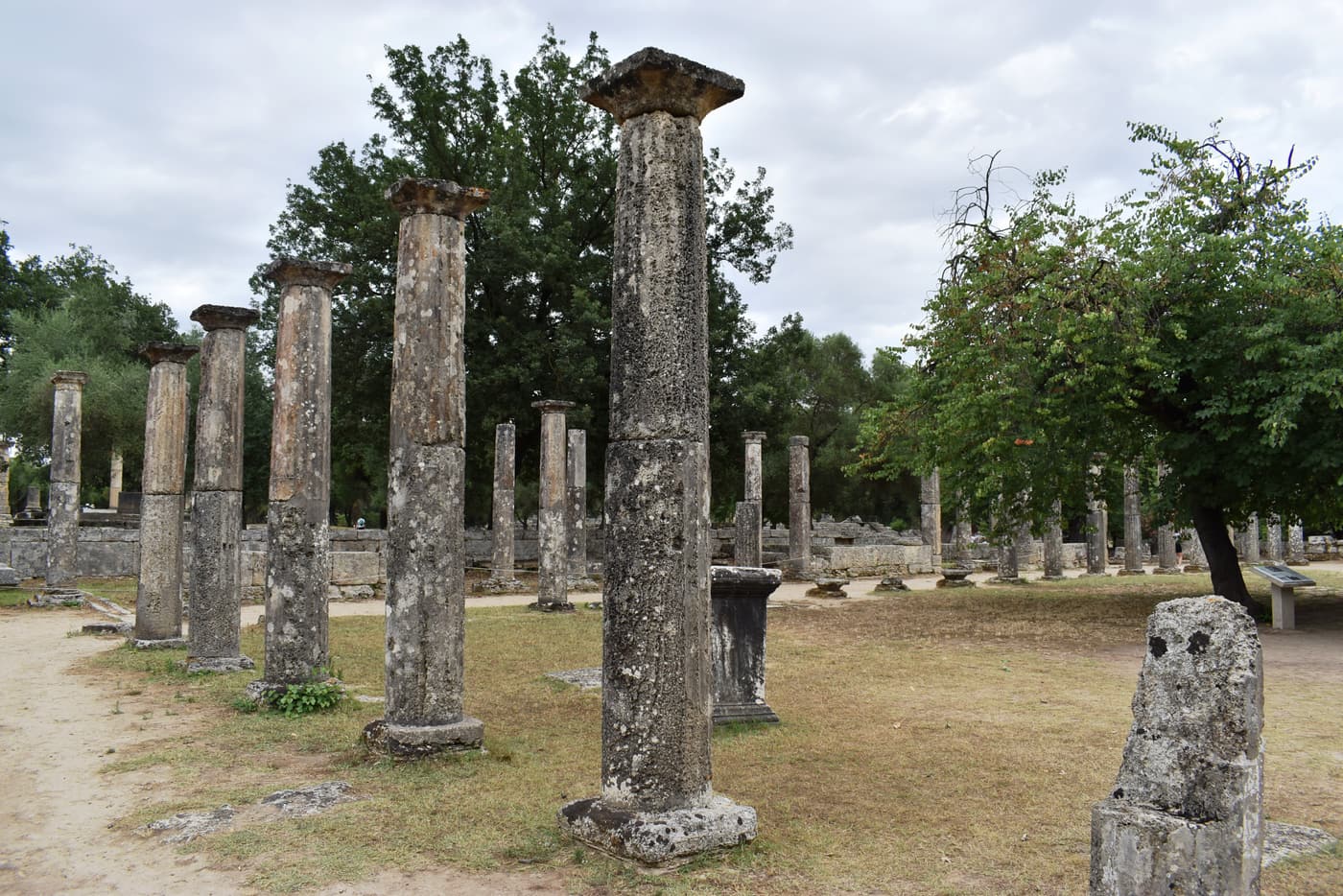
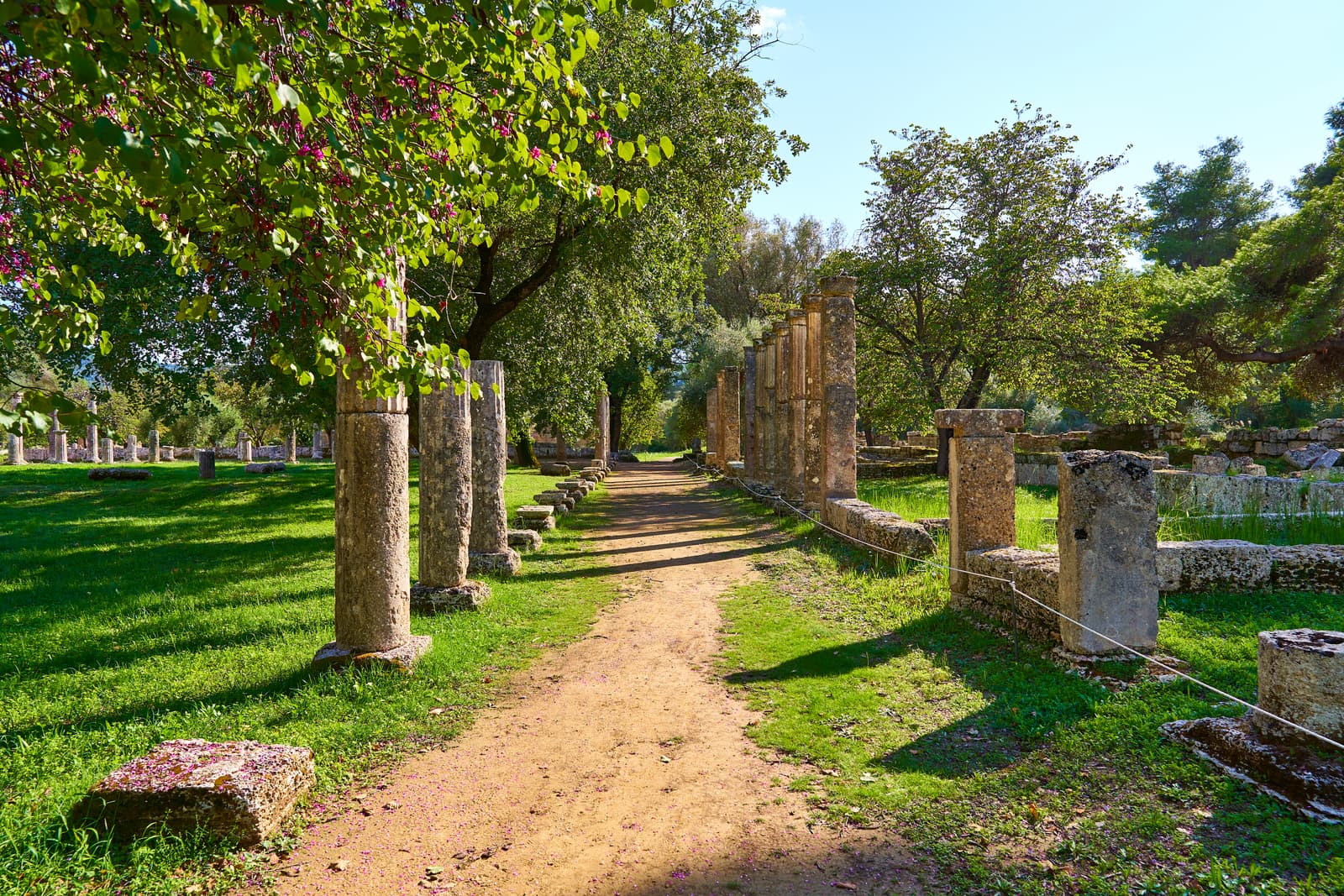
Palaestra & Gymnasium
Where the athletes trained
A square courtyard ringed with restored Doric columns, where wrestlers, boxers and jumpers trained, beside the vast Gymnasium where runners and javelin throwers practised in the month before the Games.
 The sanctuary (Altis)
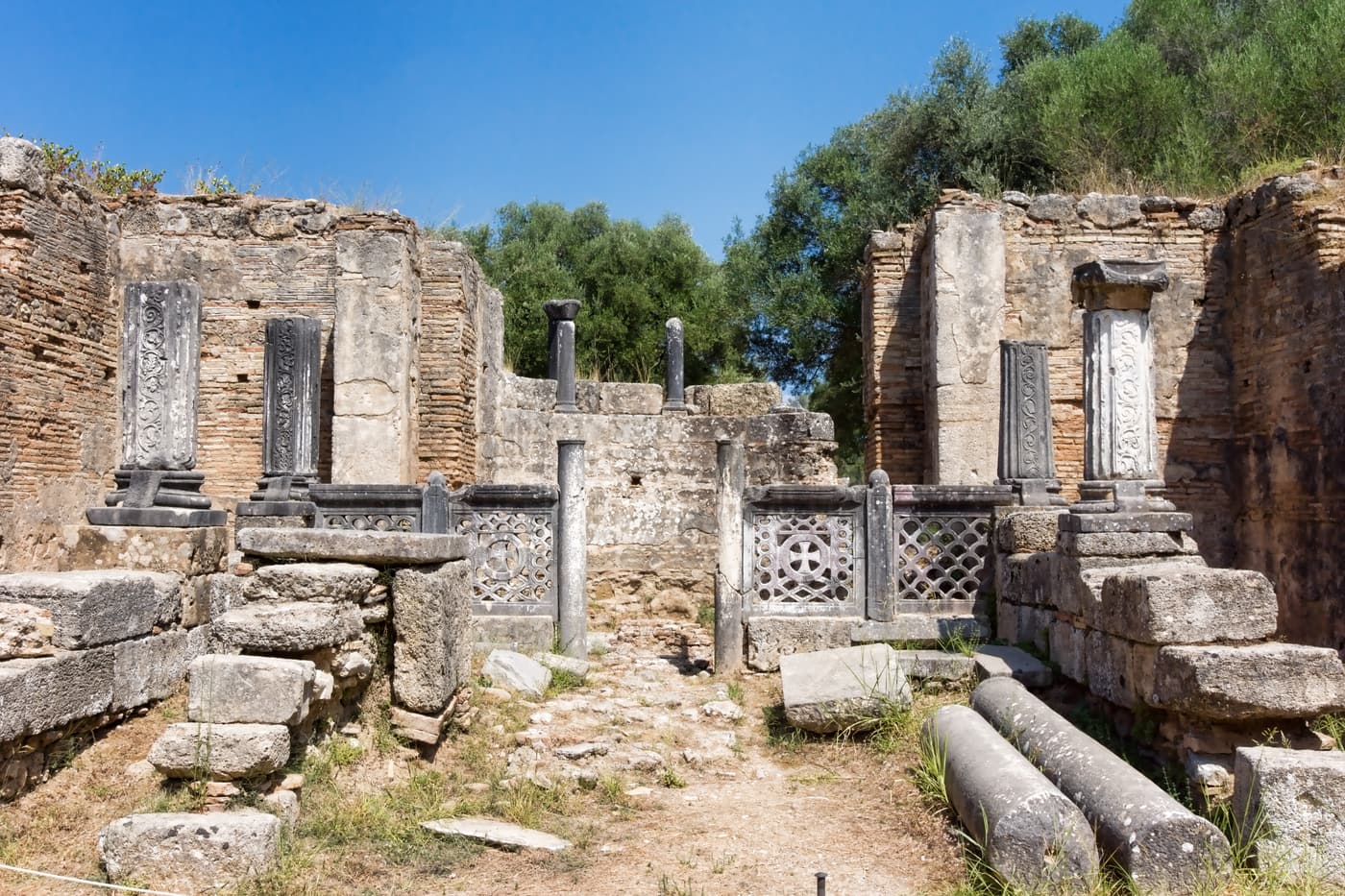
Workshop of Pheidias
Where a Wonder of the World was made
The studio in which Pheidias built the gold-and-ivory statue of Zeus, with the same dimensions as the temple’s inner chamber. Archaeologists found his tools, clay moulds and a cup inscribed with his name. Later, it became a Christian basilica.
 The sanctuary (Altis)
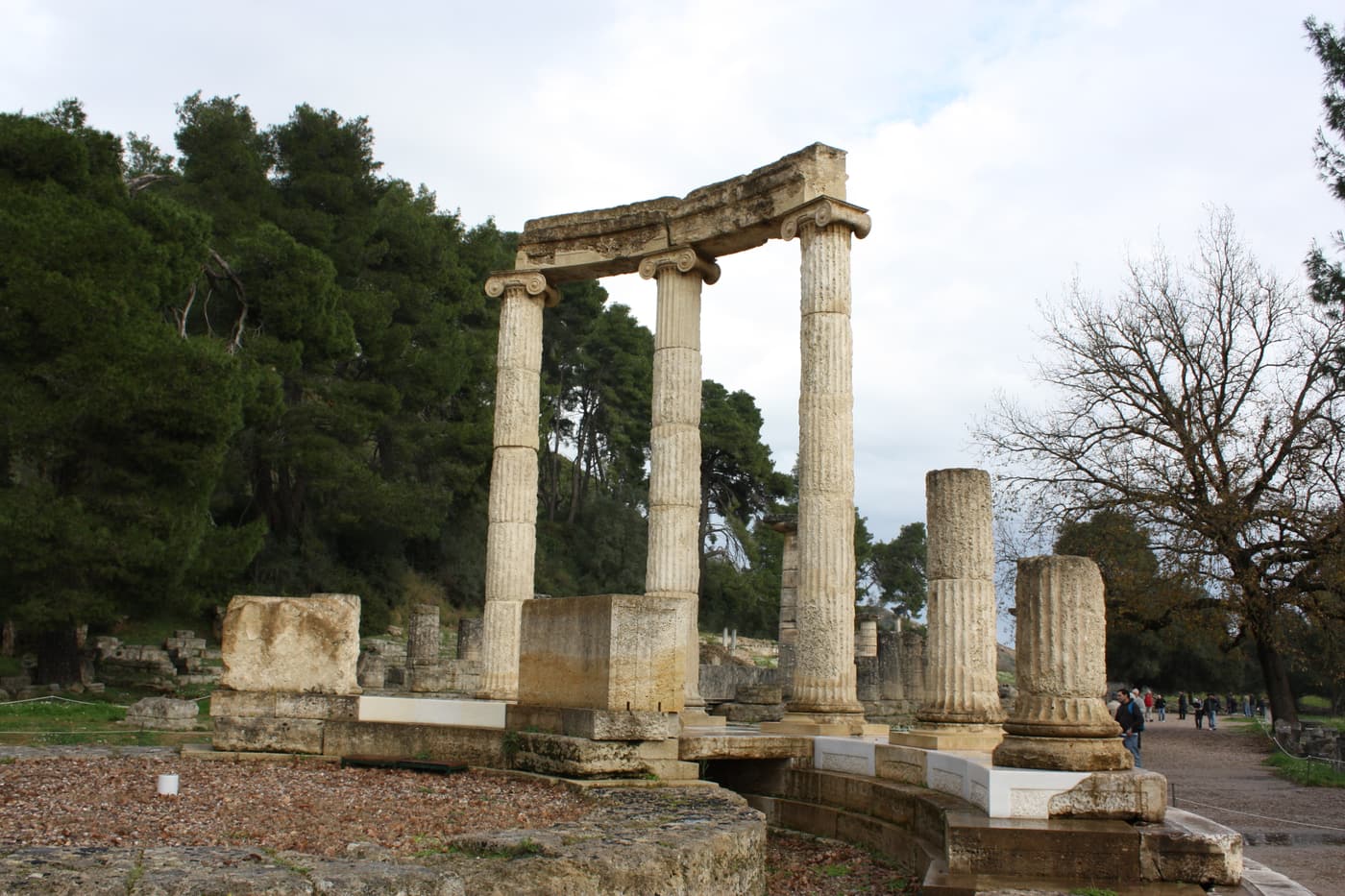
Philippeion
A Macedonian king’s statement in marble
An elegant circular monument begun by Philip II of Macedon after his victory at Chaeronea in 338 BC, housing statues of his family. Some of its Ionic columns have been re-erected.
The museums
 The museums
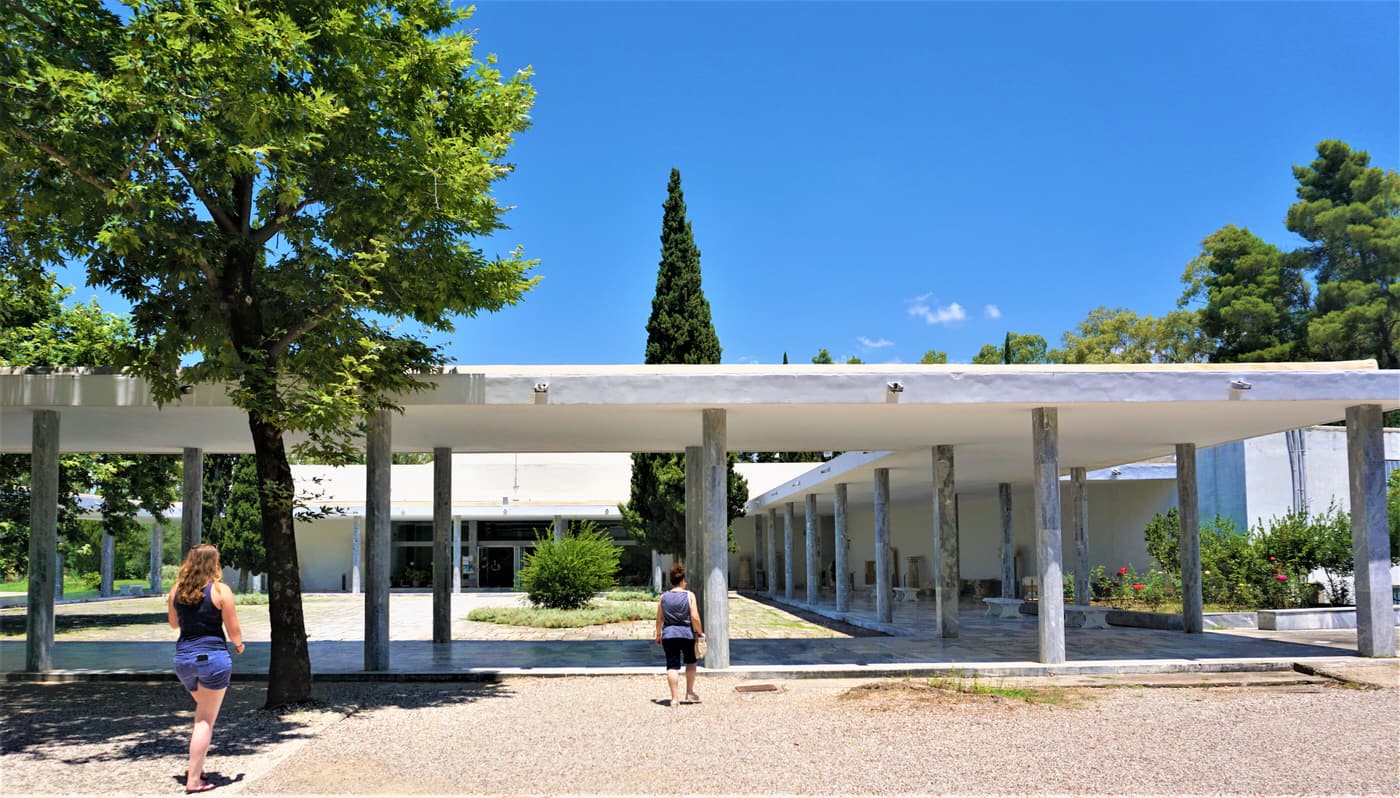
Archaeological Museum of Olympia
The finest treasures of the sanctuary
The pediments and metopes of the Temple of Zeus, Hermes of Praxiteles, the Nike of Paionios and one of the richest collections of ancient bronzes in the world — the essential second half of any visit.
 The museums
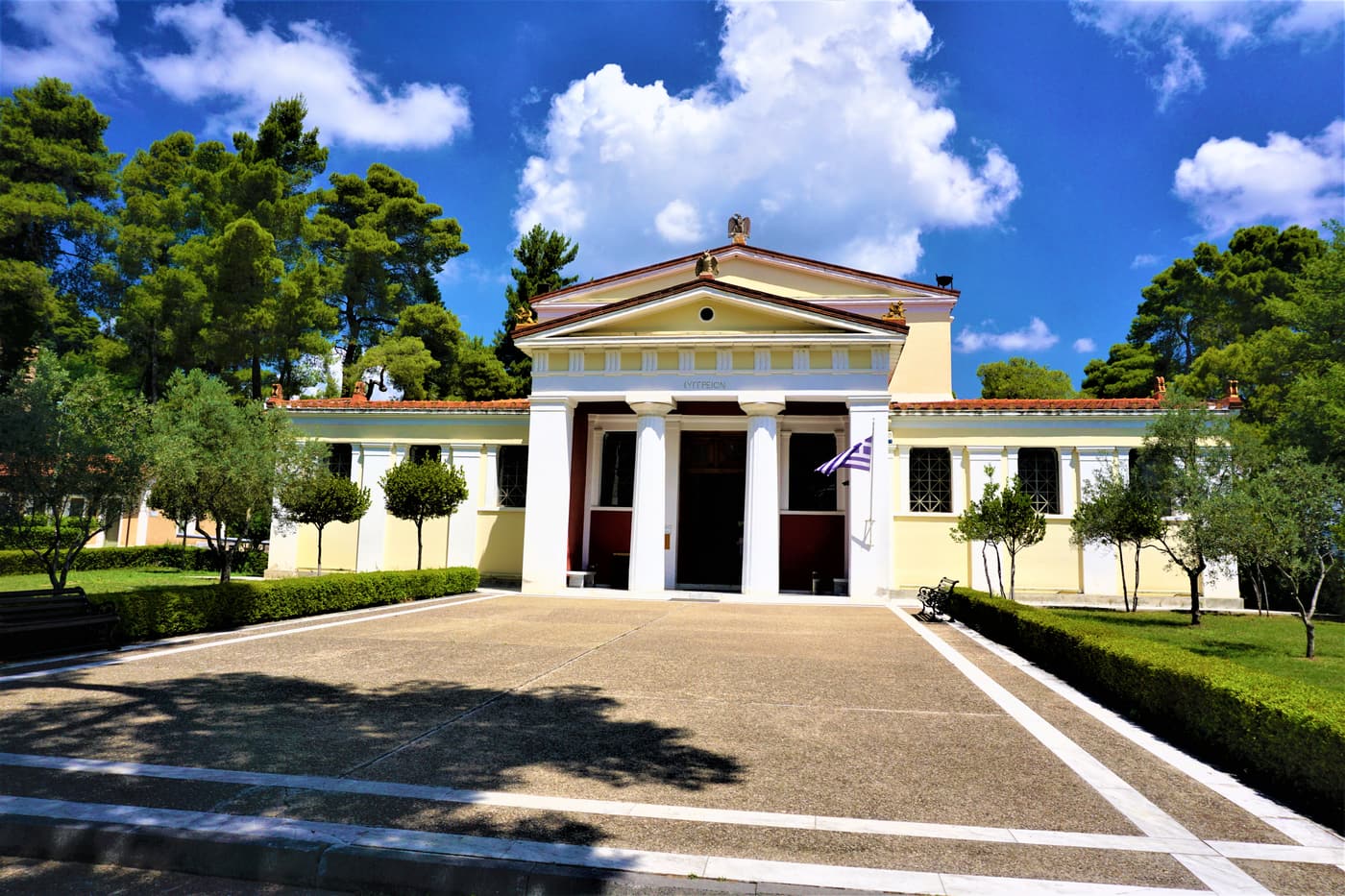
Museum of the History of the Olympic Games in Antiquity
How the ancient Games actually worked
Housed in the handsome neoclassical building of Olympia’s first museum, this collection explains the events, the athletes, the prizes and the rituals of the ancient Games — the perfect companion to the stadium.
Beyond Olympia
 Beyond Olympia
 Beyond Olympia
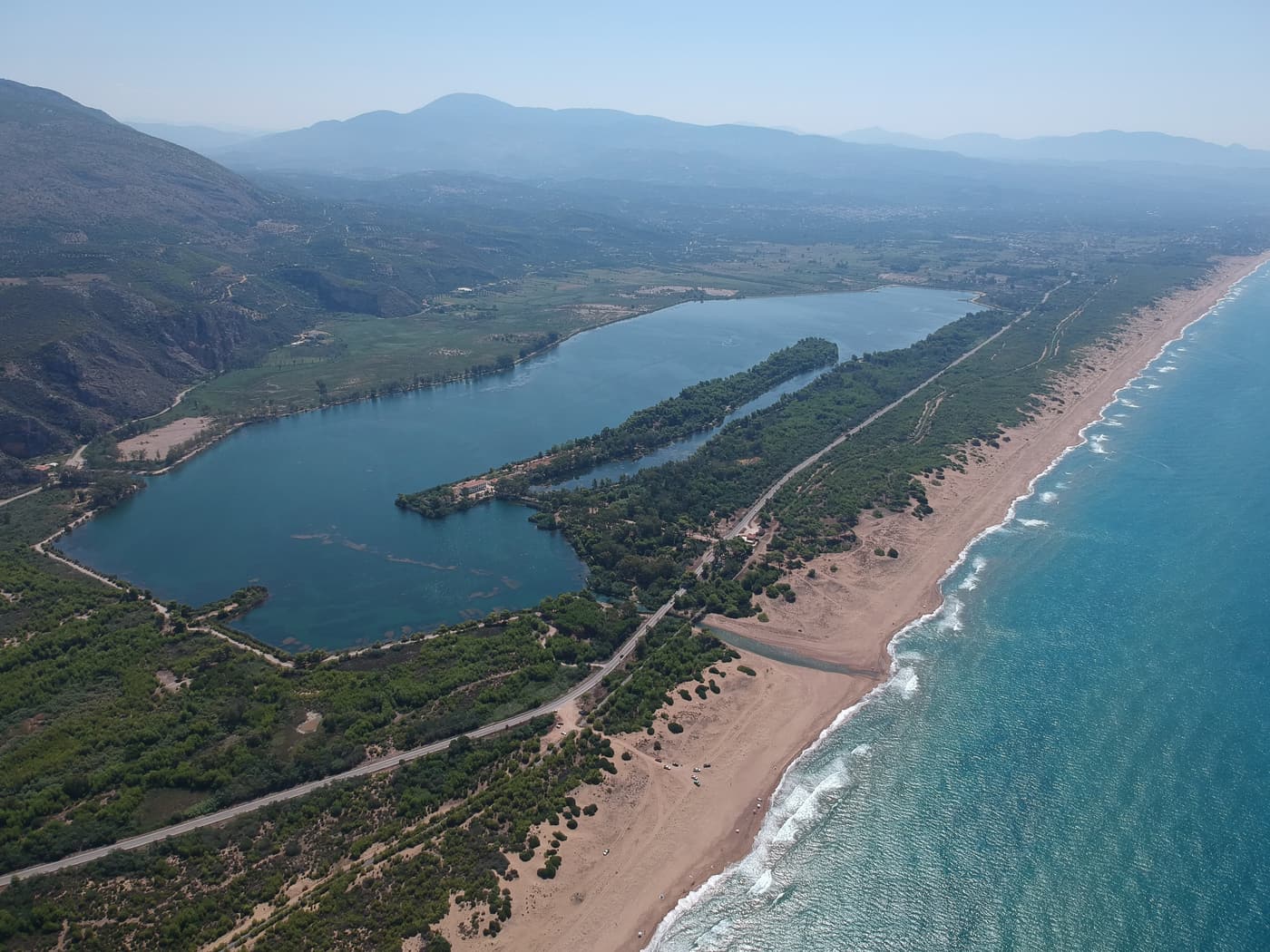
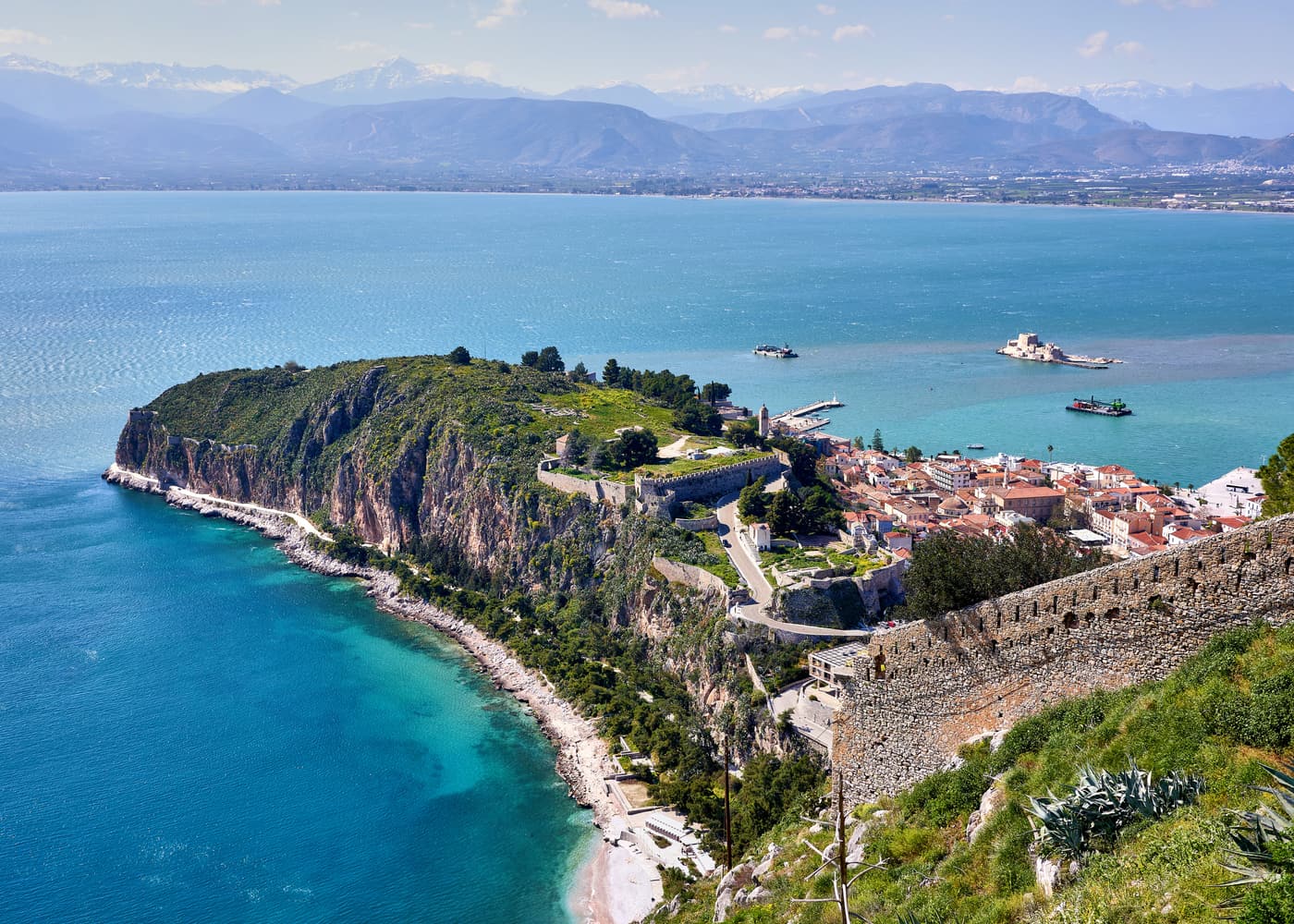
Kaiafas Lake
A lagoon, a pine forest and a long sandy beach
A coastal lake fed by thermal springs, separated from the Ionian Sea by a strip of pine forest and one of the longest sandy beaches in the Peloponnese — the easy swim after a morning in the ruins.
 Beyond Olympia
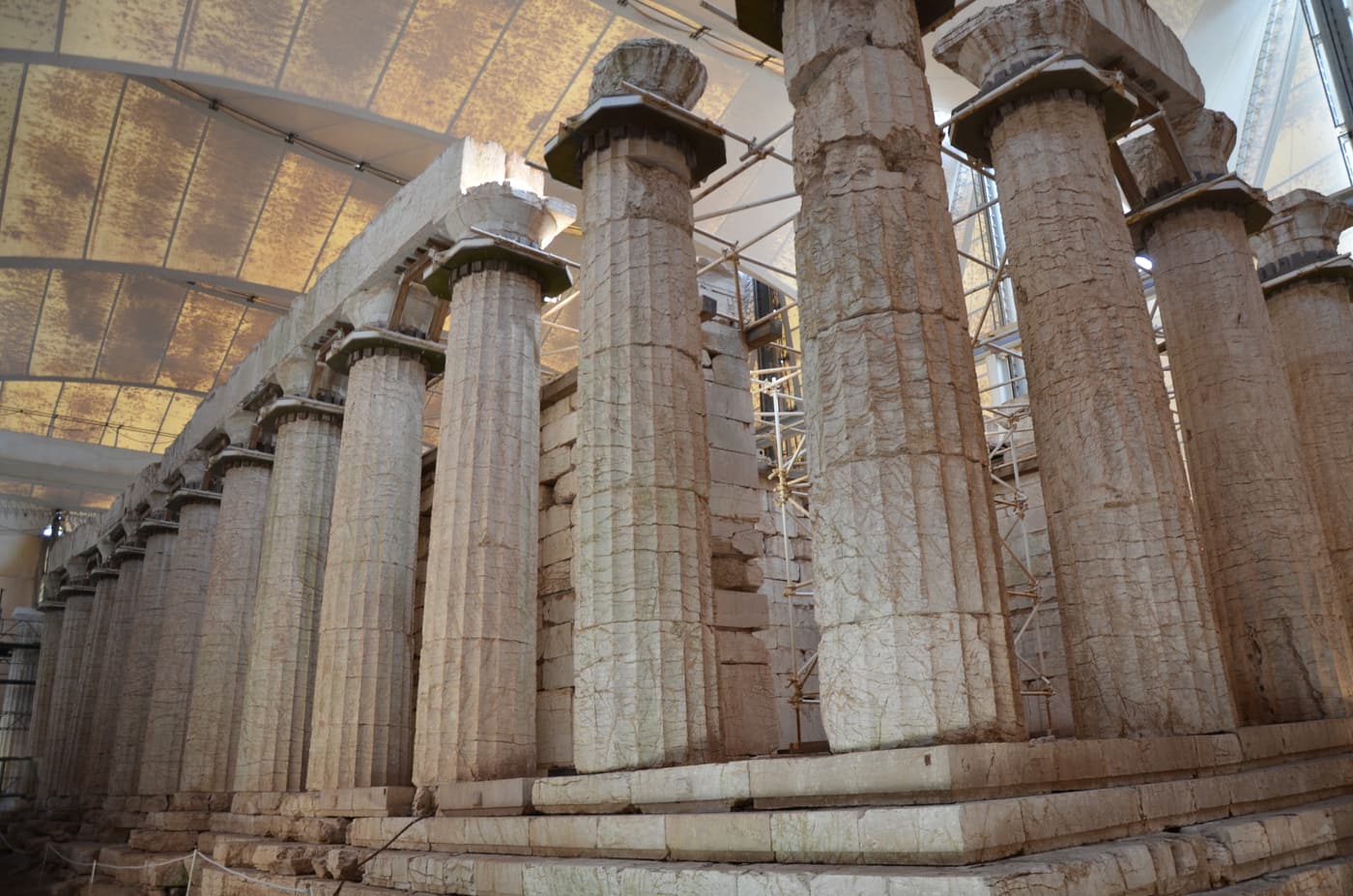
Temple of Apollo Epicurius at Bassae
Greece’s first World Heritage Site, high in Arcadia
A remarkably complete 5th-century BC temple at over 1,100 metres in the mountains of Arcadia, attributed to Iktinos, architect of the Parthenon. Protected today by a vast tent, it is one of the most atmospheric sites in Greece.
 Beyond Olympia
A sensible two-day plan: Day one, arrive in the afternoon, walk the village and eat at a taverna. Day two, the site at opening time before the cruise coaches — Temple of Zeus, Heraion, stadium, Workshop of Pheidias — then the Archaeological Museum at midday, lunch, and the Museum of the History of the Olympic Games in the afternoon. With a third day, drive into the mountains to Bassae, or down to Kaiafas for a swim.
Plan your day at Olympia
Stand where the Olympic Games began
Walk through the vaulted tunnel into the original stadium, stand beneath the fallen columns of the Temple of Zeus and meet Hermes of Praxiteles in the museum. Compare guided tours, tickets and shore excursions and book in a couple of taps.