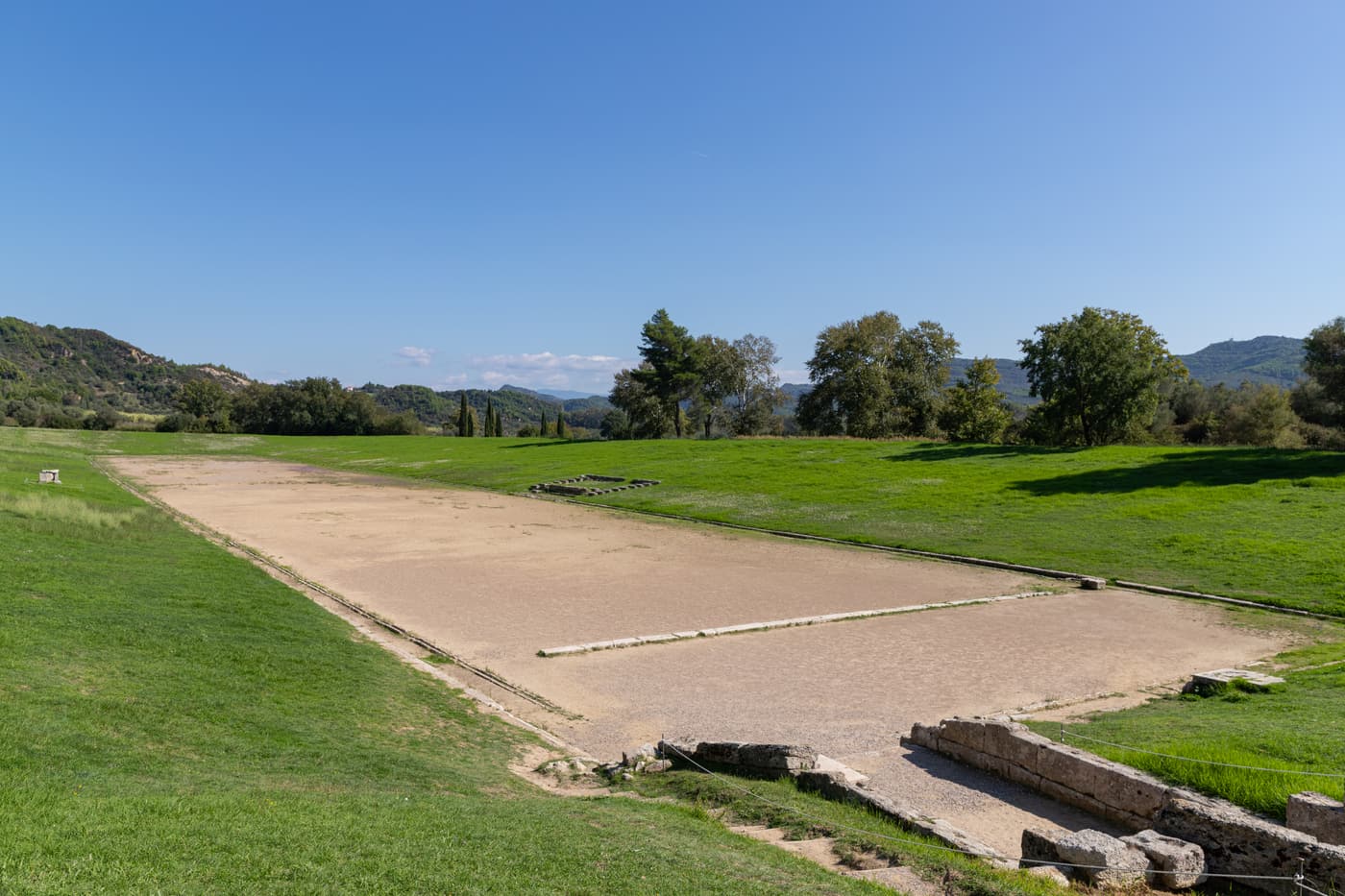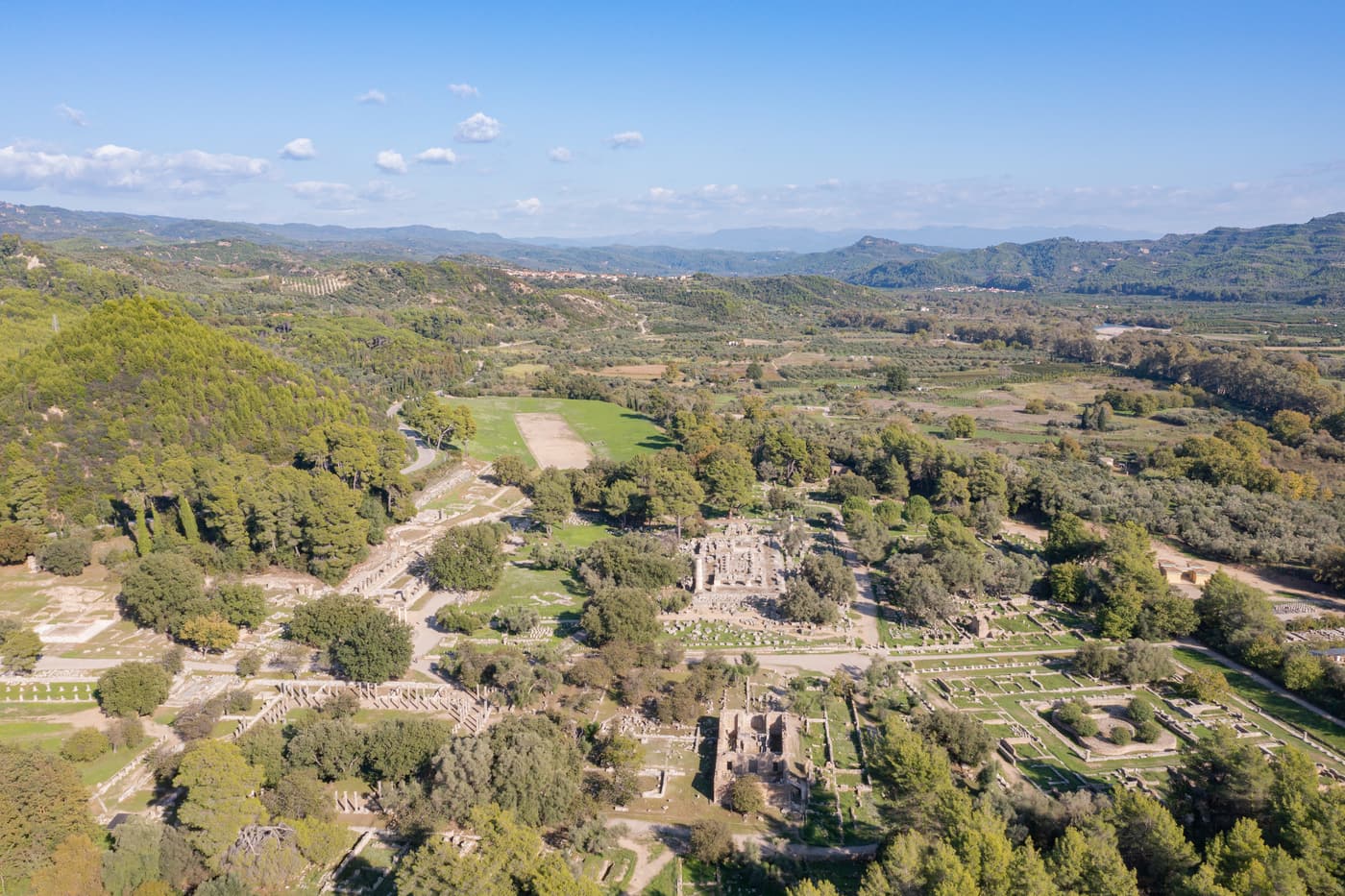
Olympia was a sanctuary, not a city. At its heart was the Altis, the walled sacred grove of Zeus, set where the Kladeos stream meets the Alfeios river beneath the pine-covered Kronion hill. Around it grew everything a great festival needed: temples and altars, treasuries built by Greek cities to show off their wealth, training grounds, baths, guesthouses for dignitaries and, to the east, the stadium.
The Games, traditionally founded in 776 BC, were held here every four years for more than a millennium. After they ended in the late fourth century AD, earthquakes and the flooding of both rivers buried the sanctuary under metres of silt. French archaeologists made the first soundings in 1829; systematic German excavations began in 1875 and continue today. UNESCO inscribed the site in 1989.
What to see at Archaeological Site of Olympia
Follow the athletes’ route
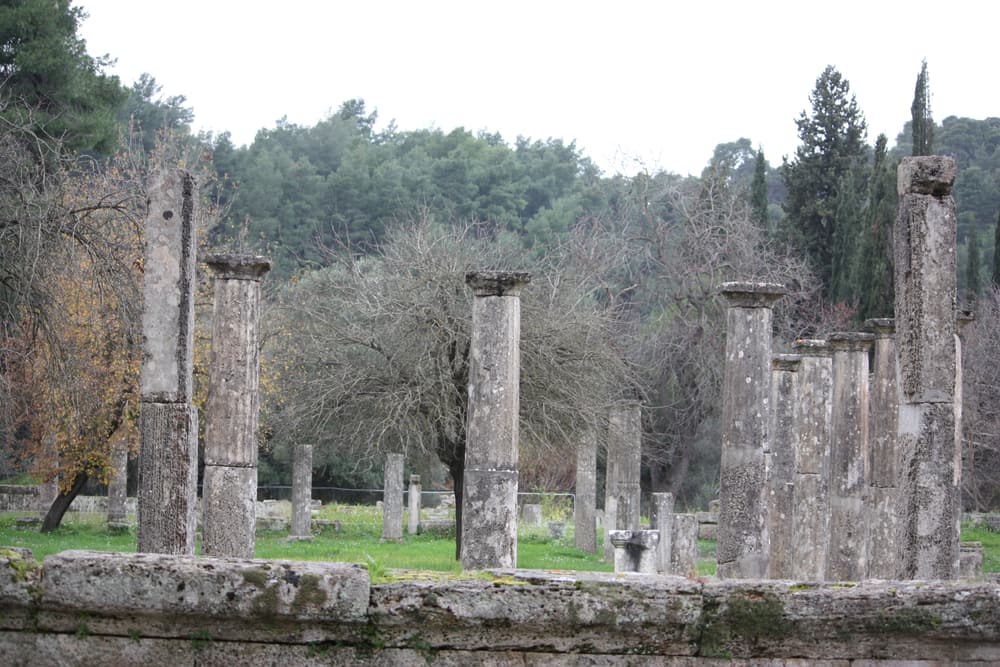
Start at the Gymnasium and Palaestra, where competitors trained for a month before the Games, then walk past the Workshop of Pheidias and the Leonidaion guesthouse into the Altis. It is the order in which athletes themselves experienced the sanctuary.
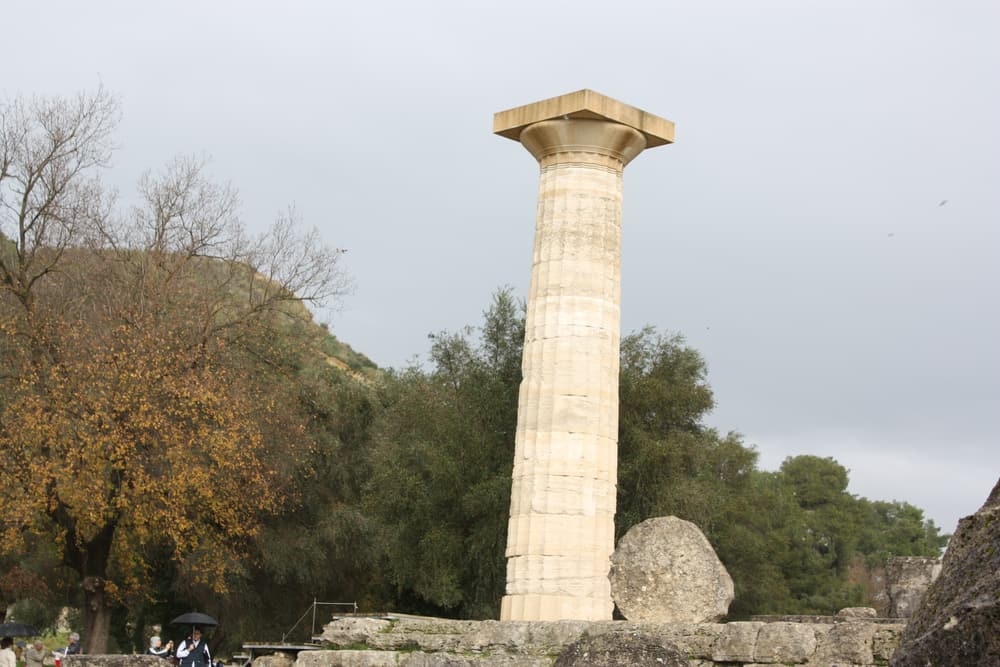
Stand before the Temple of Zeus
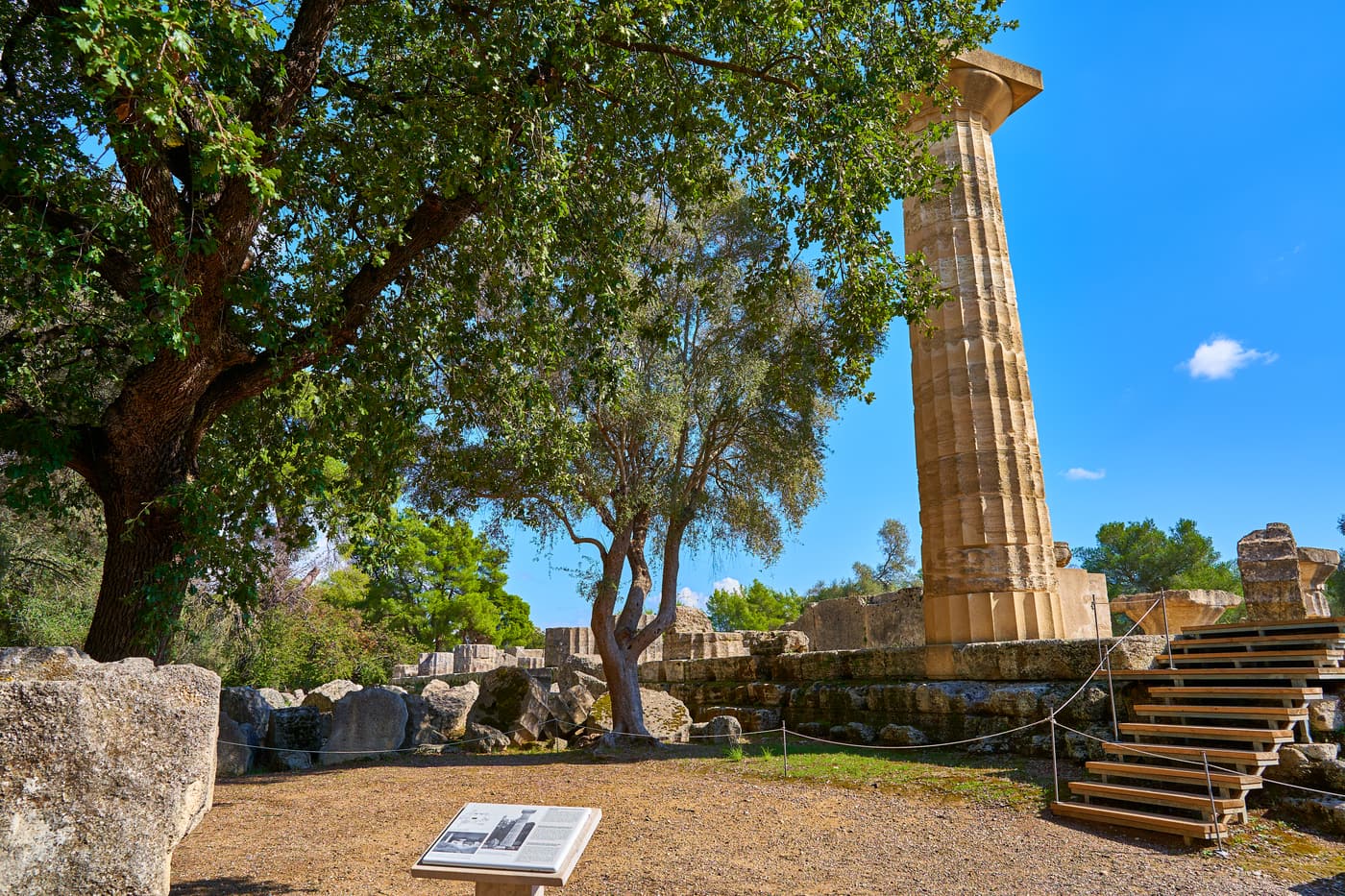
The enormous platform and the column drums scattered by earthquakes give a real sense of the scale of the building that housed a Wonder of the World. Read our Temple of Zeus guide before you go.
Walk the terrace of the treasuries to the stadium
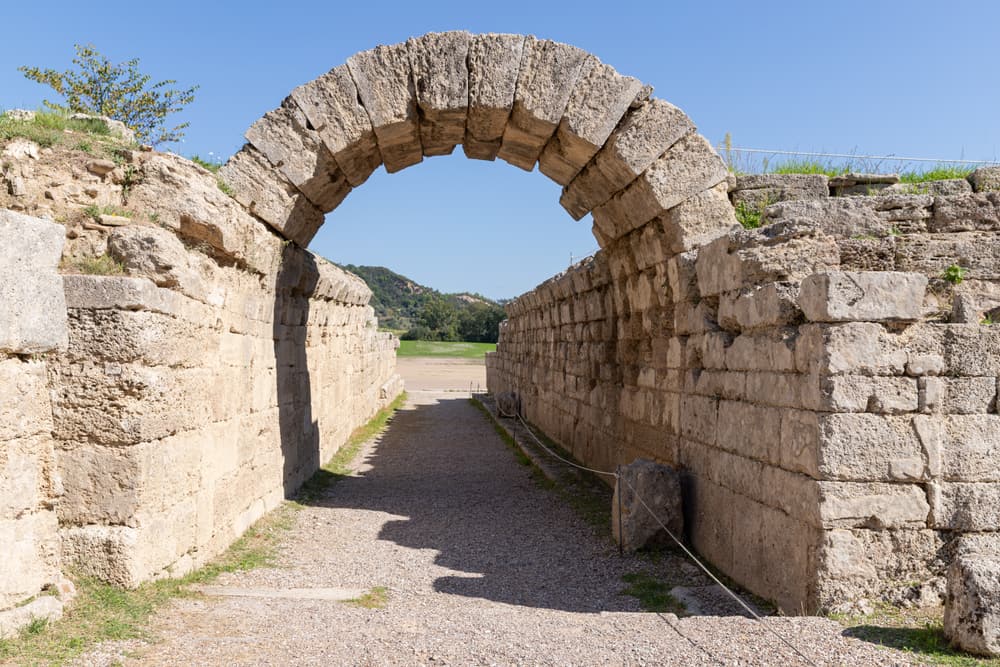
Below the treasuries stand the bases of the Zanes — bronze statues of Zeus paid for with fines from athletes caught cheating, placed where every competitor would pass them. Beyond them, the vaulted tunnel leads into the stadium.
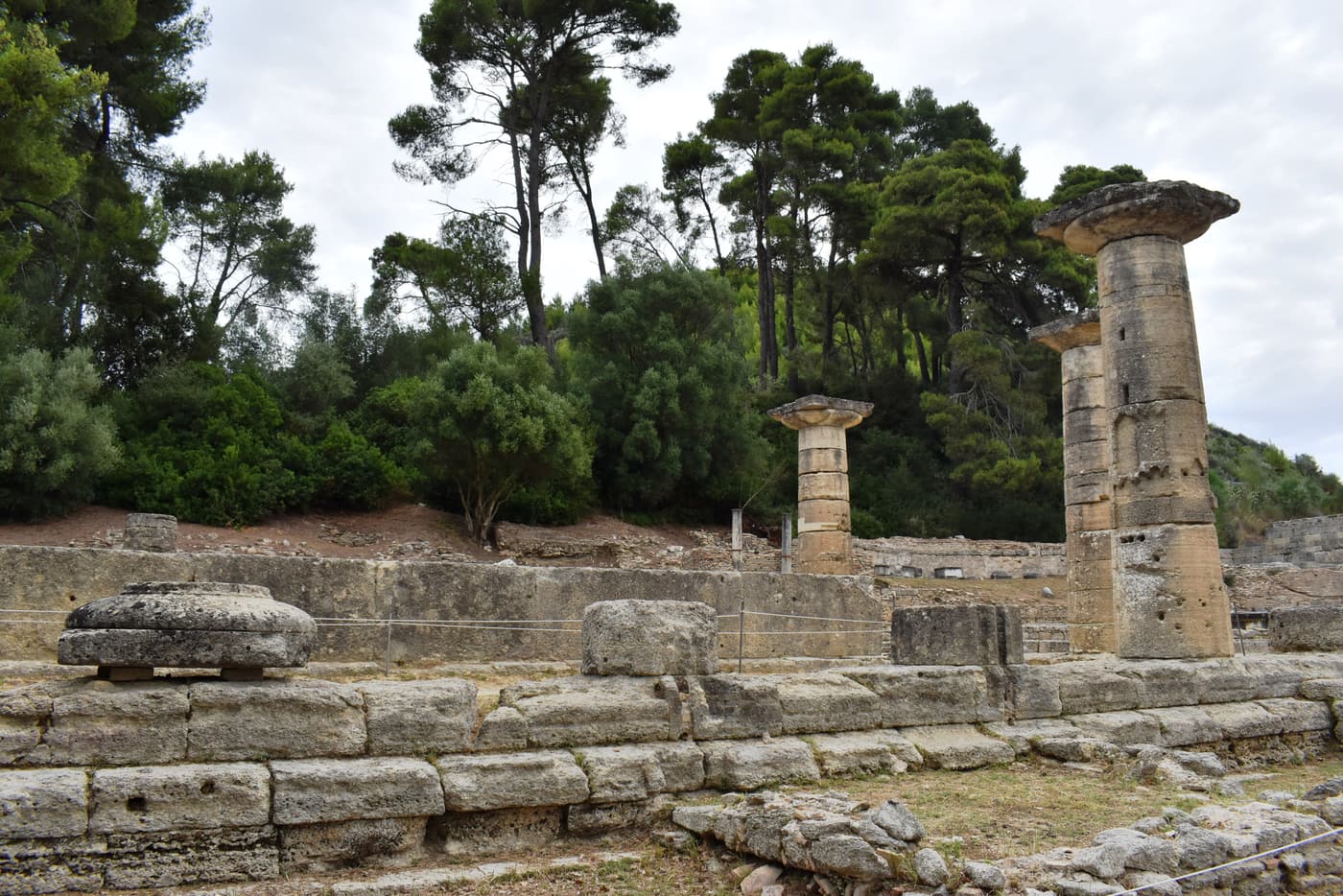
Find the Temple of Hera and the Philippeion
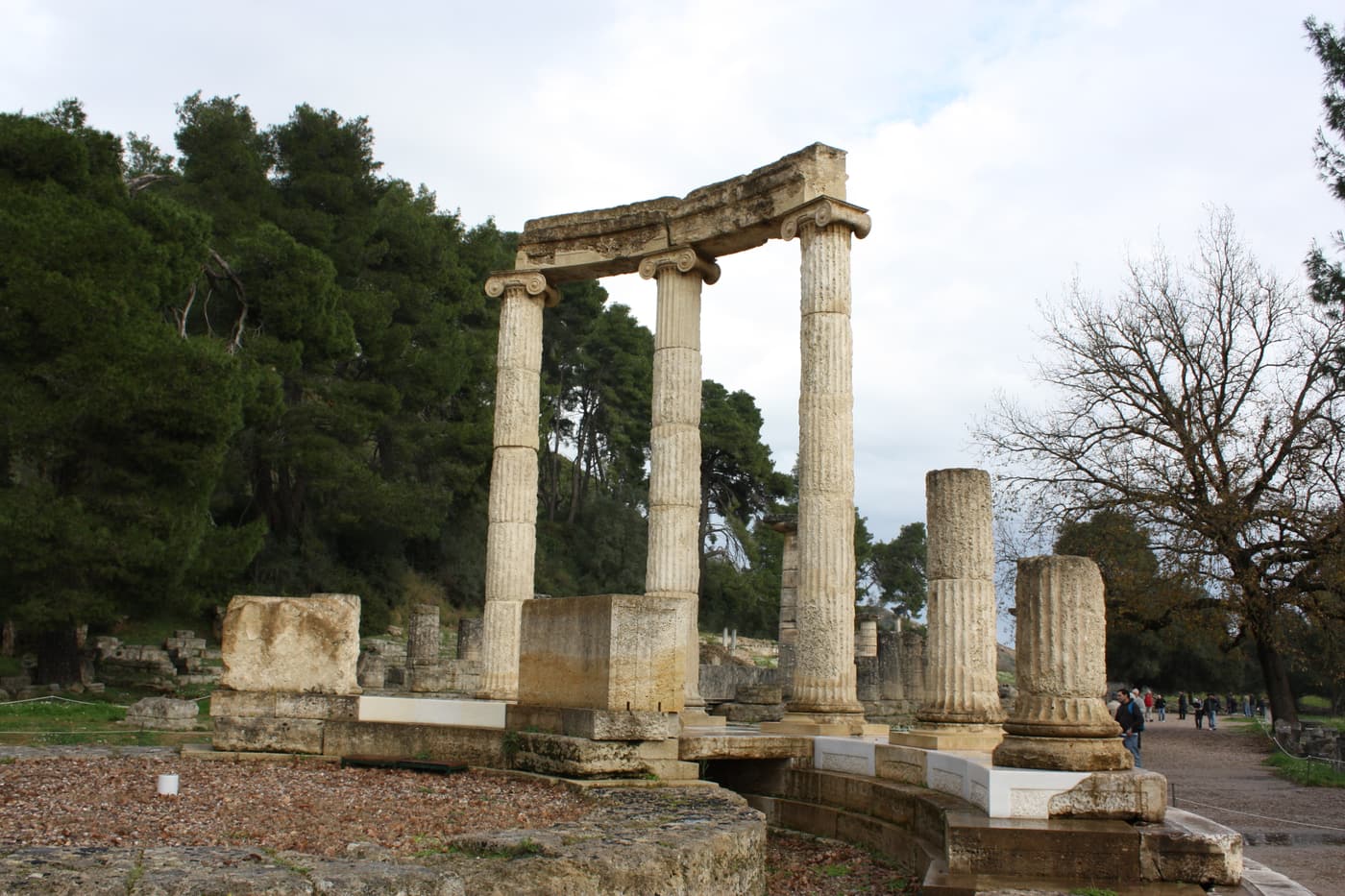
At the foot of Kronion hill, the Heraion is where the Olympic flame is lit today; beside it is the circular Philippeion of Philip II.
How to get to Archaeological Site of Olympia
- Entrance: at the southern end of the main street of Archaia Olympia, next to the Archaeological Museum. There is parking nearby.
- From Katakolo: about 40 minutes by road — see our Katakolo guide.
- From Athens: about 3.5–4 hours by car — see getting to Olympia.
Insider tips
- Arrive at opening time. On multi-ship days at Katakolo, the site is busiest from roughly 09:30 to 13:30.
- Buy the combined ticket — the site plus the museums — and do the site first while it is cool, then the air-conditioned museum.
- Bring water and a hat. The Altis has pine shade; the stadium has none.
- The site is mostly foundations. A guide, the VR tour or an audio guide makes an enormous difference.
Best tours & tickets for Archaeological Site of Olympia
These top-rated experiences are the easiest way to see Archaeological Site of Olympia with context:
 Self-guided VR from €25
Olympia: The Famous VR Glasses Tour with Audio Guide
The best-reviewed experience at Olympia. Hold up the VR glasses at marked points around the site and the ruins in front of you are rebuilt as they looked in antiquity, while an audio guide tells the story. The site entry ticket is usually separate — check the listing.
- See 15 monuments reconstructed through VR glasses
- Multilingual audio commentary at your own pace
- The Temple of Zeus and Philippeion as they once stood
 Private tour from €118
Olympic Site All-Inclusive Private Tour with a Local Expert
An exclusive two-hour walk through the sanctuary with a field archaeologist and certified guide. Expect the stories behind the stones — how the Games were run, who paid for what, and how the site was lost and found.
- A field archaeologist as your private guide
- Admission handled — no ticket queue
- Perfect rating from 30+ reviews
 Private tour from €246 per group
Private Guided Tour of Ancient Olympia
A private guided walk of almost two and a half hours through the Altis: the temples of Zeus and Hera, the treasuries, the workshop where Pheidias made his statue, and the stadium. Priced per group, so the more of you there are, the better the value.
- Private licensed guide for your group
- The sacred grove of Zeus and all its main buildings
- Priced per group (up to 7) — great for families
 Shore excursion from €58
Katakolon: Olympia Highlights Shore Excursion
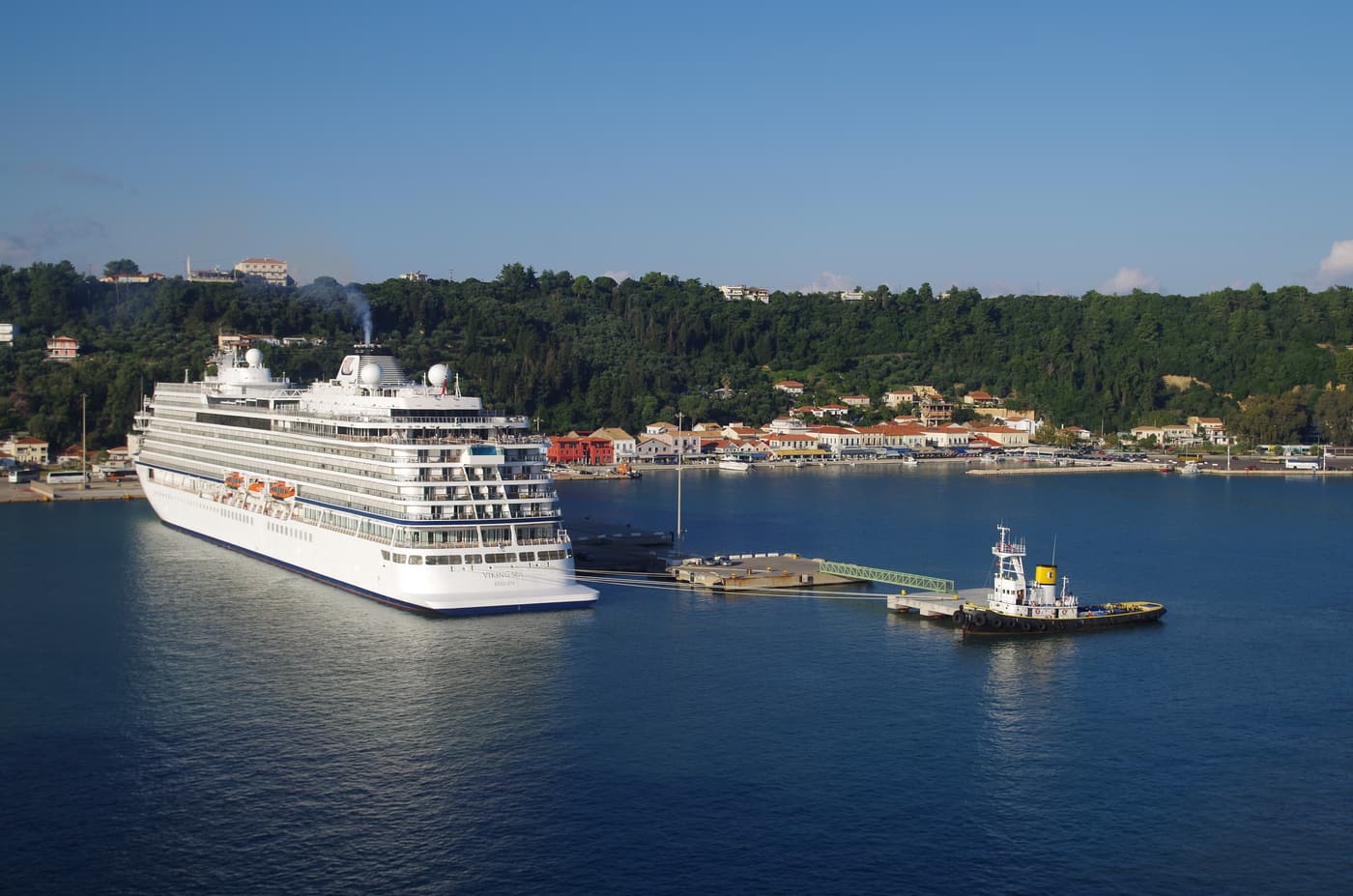
A guided shore excursion built for cruise passengers: meet at the port, drive through the Ilia countryside to Olympia, and explore the ruins with a guide who brings the history and mythology of the ancient Games to life before returning to the ship.
- Transport from the Katakolo cruise pier
- Guided visit to the sanctuary of Zeus and the stadium
- Timed around your ship’s schedule